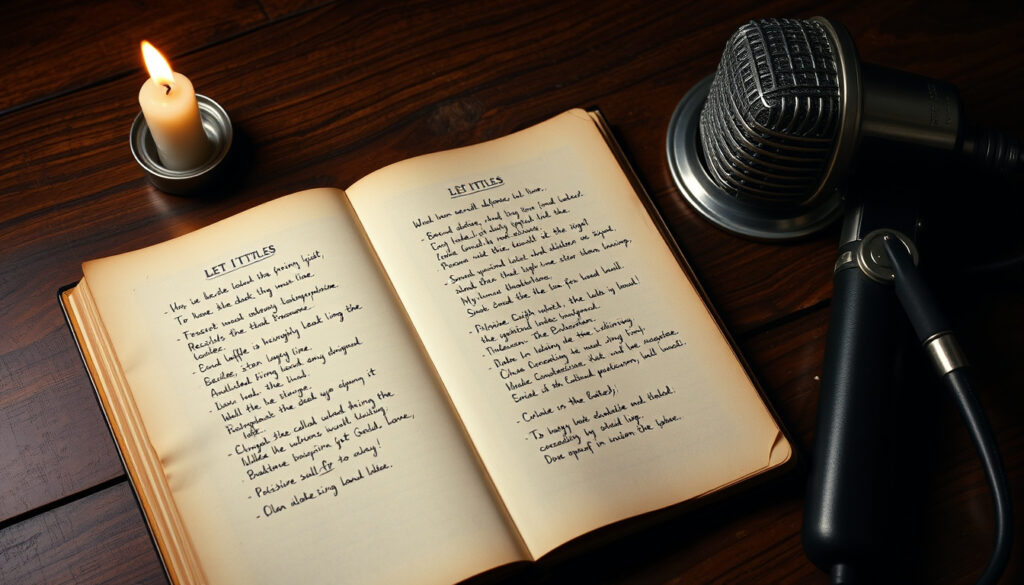
Let It Be Lyrics: Story, Meaning, and John Lennon’s Criticism
Few Beatles songs have sparked as much curiosity about their meaning as “Let It Be.” The gentle piano chords and reassuring chorus have comforted millions, but the story behind the lyrics is surprisingly personal: the song came to Paul McCartney in a dream about his mother Mary, who died when he was 14, and that dream gave birth to one of the most debated lines in pop music — “Mother Mary” — and also set off a decades-long rift with John Lennon.
Release year: 1970 · Writer and lead vocalist: Paul McCartney · Album: Let It Be · Chart peak (US Hot 100): #1 (Wikipedia) · Inspiration: McCartney’s dream of his mother Mary (The Paul McCartney Project)
Quick snapshot
- Written by Paul McCartney (Wikipedia)
- Inspired by a dream of his mother Mary (The Paul McCartney Project)
- Released in 1970 on the Beatles’ final studio album (The Beatles Bible)
- “Mother Mary” refers to McCartney’s biological mother (The Paul McCartney Project)
- Message of acceptance and peace, not passivity (Guideposts)
- The repeated refrain “let it be” became the song’s thesis (Guideposts)
- Lennon publicly distanced himself from the song (Wikipedia)
- Called it “Paul” and said it had “nothing to do with the Beatles” (Wikipedia)
- Disliked its commercial, simplistic sound (Wikipedia)
- Some hear “Mother Mary” as the Virgin Mary, especially the Annunciation (Wikipedia)
- McCartney says listeners can interpret it however they like (The Paul McCartney Project)
- Song is frequently used in spiritual contexts despite the author’s denial (Guideposts)
Six key facts capture the song’s DNA: from the songwriter to the runtime, each detail adds a layer to its story.
| Attribute | Value |
|---|---|
| Songwriter | Paul McCartney (credited to Lennon–McCartney) (Wikipedia) |
| Lead vocals | Paul McCartney (Wikipedia) |
| Release date | 6 March 1970 (The Beatles Bible) |
| Album | Let It Be (The Beatles Bible) |
| Genre | Rock, gospel (Wikipedia) |
| Length | 3:50 (single version), 4:01 (album version) (The Paul McCartney Project) |
What is the story behind the song “Let It Be”?
Paul McCartney’s dream about his mother Mary
- McCartney’s mother Mary died of cancer when he was 14 (Guideposts).
- In 1968, during a period of turmoil within the Beatles, McCartney dreamed of his mother. She appeared to him and said, “It will be all right, just let it be” (The Paul McCartney Project).
- McCartney has said he was in “times of trouble” when he wrote the song (The Paul McCartney Project).
The dream origin reveals that “Let It Be” was McCartney’s private grief work, not a calculated pop move. The song’s power comes from that raw autobiographical core.
The recording sessions and album context
- The song was mostly recorded in early 1969, before the Abbey Road sessions (The Beatles Bible).
- Final overdubs and mixing took place on January 4, 1970. John Lennon does not appear on either the single or the album version because McCartney replaced his bass part (The Paul McCartney Project).
- The album Let It Be was the Beatles’ last to be released, arriving in May 1970 after the group had already disbanded (The Beatles Bible).
The implication: McCartney turned a moment of personal grief into a universal anthem, but it also deepened the rift that ended the band.
Is the song “Let It Be” a religious song?
Interpretation of “Mother Mary” as the Virgin Mary
- The opening line “When I find myself in times of trouble / Mother Mary comes to me” has led many listeners to see a reference to the Virgin Mary, especially the Annunciation scene (Wikipedia).
- Some Christian groups have adopted the song as a hymn, and it appears frequently in church services and gospel covers (Guideposts).
McCartney’s clarification that it refers to his biological mother
- McCartney has repeatedly stated that “Mother Mary” is his own mother, also named Mary, not a religious figure. He has said listeners are free to interpret it however they wish (The Paul McCartney Project).
- The song’s core message of acceptance fits both a spiritual and a secular reading, which is why it endures across audiences.
McCartney’s denial of religious intent doesn’t stop millions from finding spiritual comfort in the song. The ambiguity is the engine of its universality.
The catch: What started as a private conversation with his mother became a vessel for others’ faith.
What did John Lennon think about “Let It Be”?
Lennon’s public criticism of the song
- John Lennon made his feelings clear in a 1980 Playboy interview, saying the song was “Paul” and had “nothing to do with the Beatles” (Wikipedia).
- He told the same interviewer he did not know what McCartney was thinking when he wrote it (Wikipedia).
- Lennon also expressed that the song was too simplistic and commercial for his taste (Wikipedia).
Lennon’s comments in interviews
- In a 1971 interview, Lennon voiced his frustration with what he saw as McCartney’s dominance of the band’s later output. His critique of “Let It Be” was part of a broader disappointment with the direction of the Beatles’ final years (Wikipedia).
- Lennon’s absence from the final recording — McCartney replaced his bass part — further underscores his detachment from the track (The Paul McCartney Project).
The pattern: Lennon’s dismissals often revealed more about the crumbling partnership than about the song itself.
Why didn’t John Lennon like “Let It Be”?
Lennon’s artistic disagreements with McCartney
- Lennon believed McCartney’s songs had become too sentimental and formulaic. “Let It Be” epitomized everything he disliked about Paul’s later style: the gospel chords, the repetitive chorus, the “comforting” message (Wikipedia).
- The song’s commercial success — it reached #1 in the US — only reinforced Lennon’s view that the public preferred safe, polished pop over his own, more experimental material.
Lennon’s preference for more experimental music
- By 1970, Lennon was pushing toward raw, confessional songwriting with the Plastic Ono Band. He found songs like “Let It Be” musically conservative (Wikipedia).
- Lennon’s own output from that period — “Mother,” “God,” “Working Class Hero” — was darker and more confrontational. The gentle resignation of “Let It Be” felt, to him, like a retreat.
Lennon’s rejection of “Let It Be” is a classic case of artist against hit: his desire for risk clashed with a song designed to soothe. History has vindicated both — the song is beloved, and his critique became part of its legend.
What this means: The split over one song mirrored the creative chasm that ended the group.
What are the lyrics to “Let It Be” in English?
Full lyrics of the song
When I find myself in times of trouble, Mother Mary comes to me
Speaking words of wisdom, let it be
And in my hour of darkness she is standing right in front of me
Speaking words of wisdom, let it be
Let it be, let it be, let it be, let it be
Whisper words of wisdom, let it beAnd when the broken-hearted people living in the world agree
There will be an answer, let it be
For though they may be parted there is still a chance that they will see
There will be an answer, let it be
Let it be, let it be, let it be, let it be
Yeah, there will be an answer, let it beAnd when the night is cloudy there is still a light that shines on me
Shine until tomorrow, let it be
I wake up to the sound of music, Mother Mary comes to me
Speaking words of wisdom, let it be
Let it be, let it be, let it be, let it be
Yeah, let it be, let it be, let it be, let it be
Whisper words of wisdom, let it be
Source: Wikipedia
Meaning of key phrases like “speaking words of wisdom”
- The phrase “speaking words of wisdom” refers to the reassurance McCartney’s mother gave him in his dream: the wisdom that everything would be all right if he simply let it be (The Paul McCartney Project).
- The repeated line “There will be an answer, let it be” serves as the song’s thesis of acceptance and hope (Guideposts).
- Some commentators read the lyrics as a farewell to the Beatles — the “broken-hearted people” and the “night is cloudy” reflecting the band’s dissolution (Wikipedia).
McCartney’s dream ensured the song would never be just another pop tune — it stayed tethered to a son’s grief.
Timeline signal
Five moments that shaped the song and its reception:
Clarity check
Confirmed facts
- McCartney dreamed of his mother Mary, and that dream inspired the song (The Paul McCartney Project).
- John Lennon publicly distanced himself from the song, saying it was “Paul’s” and not a Beatles effort (Wikipedia).
- The song reached #1 on the US Billboard Hot 100 (Wikipedia).
What’s unclear
- Whether Lennon’s criticism was purely artistic or also personal animosity toward McCartney (Wikipedia).
- The exact date of McCartney’s dream — it is placed in 1968 but not precisely documented (The Paul McCartney Project).
- Whether the song is a farewell to the Beatles is debated among commentators (Wikipedia).
Quotes from the people who made it
“I had a dream of my mother. She came to me and said, ‘It will be all right, just let it be.’”
— Paul McCartney, as recorded in a 1997 biography (The Paul McCartney Project)
“That’s Paul. What can I say? I don’t know what he’s thinking when he writes those things.”
— John Lennon, 1980 Playboy interview (Wikipedia)
“If you want to take it as the Virgin Mary, that’s cool. But it’s my mother.”
— Paul McCartney, on the interpretation of “Mother Mary” (The Paul McCartney Project)
For fans who want to understand the Beatles’ creative tensions, the choice is clear: appreciate “Let It Be” as McCartney’s personal hymn, or dismiss it the way Lennon did — but don’t ignore the story behind it. The song is both a comfort and a document of a breakup, and that duality is what keeps people asking about its meaning more than 50 years later.
youtube.com, the-paulmccartney-project.com, shineyourjoy.space, facebook.com, youtube.com, catholicstand.com, youtube.com, en.wikipedia.org
For a deeper dive into the religious interpretations and Lennon’s critique, check out this detailed analysis of the Let It Be lyrics meaning.
Frequently asked questions
What is the meaning of “Let It Be”?
The meaning is rooted in McCartney’s dream: accept difficult circumstances with patience and hope. It can also be heard as a spiritual mantra or a farewell to the Beatles.
Who wrote “Let It Be”?
Paul McCartney wrote the song, though it is credited to the Lennon–McCartney partnership (Wikipedia).
Is “Let It Be” about the Virgin Mary?
McCartney says “Mother Mary” refers to his own mother, but he welcomes other interpretations. Many listeners hear a reference to the Virgin Mary.
Why did John Lennon hate “Let It Be”?
Lennon felt the song was too sentimental, commercial, and representative of McCartney’s dominance. He disowned it as “Paul’s song.”
What album is “Let It Be” on?
It is the title track of the Beatles’ final studio album, Let It Be, released in May 1970 (The Beatles Bible).
When was “Let It Be” released?
The single was released on 6 March 1970 (The Beatles Bible).
What are the chords for “Let It Be”?
The song uses basic chords: C, G, Am, F, and a Dm7 in the bridge. Many websites provide free chord charts; the original key is C major.
More related posts
 Maybe Happy Ending Broadway: Plot, Cast, Tony Awards 2024
 Earned Income Tax Credit: Ireland vs US Guide 2024
 Tallest Building in the World: Burj Khalifa & Top 10 2026
 Things to Do in Washington DC: Attractions, Tips & Safety
 PlayStation Plus Free Games: How to Claim & Keep Games
 Drog-Bruk Roman Szkaradek Reviews: Hat Snatch Fallout
 Glengarry Glen Ross Cast – From Pacino to Culkin
 Midi Dresses for Women: Length, Styles & Styling Tips