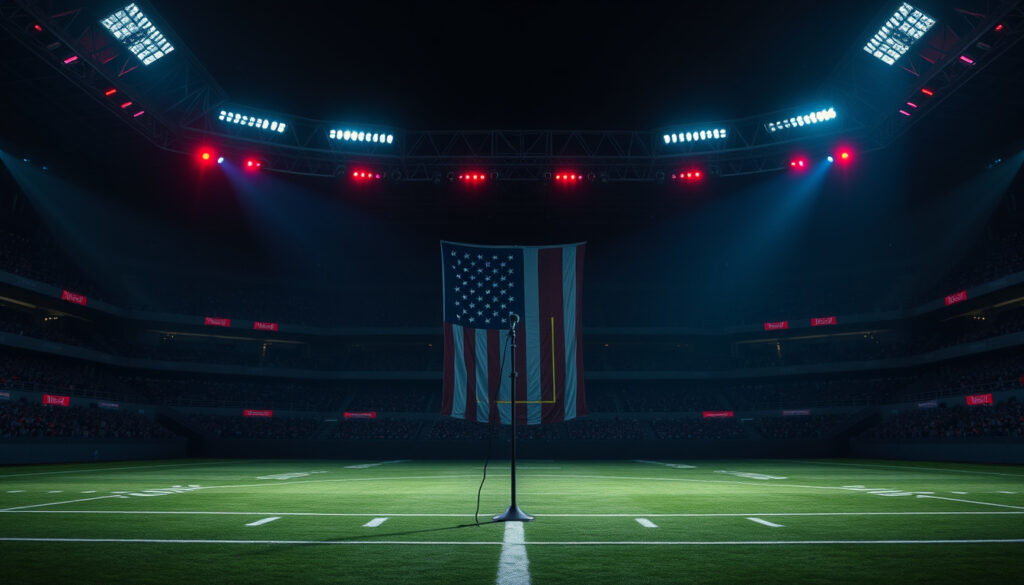
Kendrick Lamar Super Bowl Halftime Show: Controversy & Meaning
Kendrick Lamar didn’t shout “Mustard” at 130 million people by accident — it was a calculated mic drop on the world’s biggest stage. When he headlined the Super Bowl LIX halftime show on February 9, 2025, he turned the Caesars Superdome into a carefully choreographed statement: part victory lap, part political theater, and part diss-track execution.
Headliner: Kendrick Lamar (first solo rapper to headline Super Bowl halftime) ·
Guest performers: SZA, Samuel L. Jackson, Serena Williams ·
Award: NAACP Image Award for Outstanding Short Form Series or Special ·
Controversial moment: Yelling ‘Mustard’ during performance
Quick snapshot
- Kendrick Lamar headlined the Super Bowl LIX halftime show (Los Angeles Times)
- He performed with SZA, Samuel L. Jackson, and Serena Williams (Yahoo News Canada)
- He yelled ‘Mustard’ during the closing number (The Athletic / New York Times)
- Trump reportedly left his box near the end of the performance (CNN via Yahoo News Canada)
- The exact meaning of the ‘mustard’ yell remains subject to interpretation (Los Angeles Times)
- Whether the performance was deliberately political as a direct response to Trump is debated (Los Angeles Times)
- February 9, 2025: Super Bowl LIX halftime show aired (Los Angeles Times)
- Trump left his box before the show concluded (CNN via Yahoo News Canada)
- Continued analysis of the performance’s cultural impact across commentary platforms (Cornell Daily Sun)
Facts confirmed, patterns emerging — three of them, across the controversy, the meaning, and the reaction.
| Dimension | Detail |
|---|---|
| Headliner | Kendrick Lamar (first solo rapper) |
| Guest performers | SZA, Samuel L. Jackson, Serena Williams |
| Award | NAACP Image Award for Outstanding Short Form Series |
| Controversial moment | Yelling ‘Mustard’ during performance |
| Political symbolism | Use of American flag, protesters, and Uncle Sam figure |
| Trump’s presence | Attended game, reportedly left box early |
| Viewership | Over 130 million estimated |
| Setlist length | 12 songs including ‘Not Like Us’ |
The data tells a story of a performance that broke records and sparked a firestorm — largely because the president was in the building.
Why was Kendrick Lamar’s halftime show controversial?
The Super Bowl has hosted political moments before — Beyoncé’s Black Panther homage, Colin Kaepernick’s absence — but Lamar’s set landed in a uniquely charged moment: the first Super Bowl attended by a sitting president in office, Donald Trump.
What were the political gestures during the performance?
- The stage featured dancers forming an American flag, then protesters rushing it — a visual many read as referencing Jan 6 or broader civil unrest (Cornell Daily Sun student analysis).
- Samuel L. Jackson appeared as Uncle Sam, acting as a recurring commentator who seemed to police Lamar’s performance — a critique, per some analysts, of how the state monitors Black expression (Yahoo News Canada).
How did the audience react to the show?
- Conservative commentators, including Rep. Matt Gaetz (R-Fla.), slammed the performance as “woke” and claimed it was a response to Trump’s gains with Black men — though Lamar had been booked months earlier (The Independent).
- Gaetz wrote on social media that the show was “a national disgrace,” while some viewers defended it as legitimate artistic expression (The Independent).
What did critics say about the performance?
- Criticism focused on the lyrics being hard to understand, with some conservatives calling the rapping “gibberish” (The Independent).
- Other critics found the setlist too bleak for a celebration, referencing a line reportedly performed: “The revolution’s about to be televised. You picked the right time but the wrong guy” (Cornell Daily Sun student analysis).
Conservative critics condemned Lamar’s show as political propaganda aimed at Trump. But the booking was made months earlier, and the most credible reading — per multiple analysts — is that the set was aimed at rap rival Drake, not the president.
What is the deeper meaning behind Kendrick Lamar’s halftime show?
For those who watched closely, the performance was a layered argument about Black identity, resilience, and who gets to define American culture — with Uncle Sam as the gatekeeper.
What message did Kendrick Lamar convey through his setlist?
- The setlist spanned Lamar’s catalog, including “HUMBLE.”, “DNA.”, and “Not Like Us” — the latter a diss track aimed at Drake that became a cultural phenomenon (MSN syndicated sports coverage).
- The “Not Like Us” performance was teased multiple times throughout the show, building anticipation before the full reveal near the end — a masterclass in pacing that turned a rap beef into a halftime show plot (MSN syndicated sports coverage).
How did the guest appearances contribute to the theme?
- SZA joined Lamar for two songs, including “Luther” and “All the Stars,” reinforcing the theme of Black female excellence alongside her cameo (Los Angeles Times).
- Serena Williams appeared as a dancer in a cameo that celebrated Black athletic achievement and resilience — fitting for an icon who has faced racial criticism throughout her career (Los Angeles Times).
What does the ‘mustard’ yell symbolize?
The moment that went most viral was Lamar yelling “Mustarrrd!” before the closing number, “TV Off.” The reference is to producer Mustard, who produced the track. But the shout landed as something more: a victory call in a rap battle that had peaked months earlier but was being re-litigated on the world’s biggest stage (The Athletic / New York Times).
The ‘mustard’ yell became a viral meme, a diss track reference, and a symbol of how a private rap feud transformed into the most-watched halftime moment — all in three syllables.
Why did Kendrick yell mustard?
By the time Lamar shouted the producer’s name, millions of people who had never heard a Kendrick Lamar album were asking one question: who is Mustard?
What does ‘mustard’ refer to?
- Mustard is a Grammy-winning producer (real name: Dijon McFarlane) who produced “Not Like Us,” the diss track at the center of Lamar’s feud with Drake (Los Angeles Times).
- The shout directly preceded “TV Off,” another Mustard-produced track, making the moment a producer credit on a global scale (Los Angeles Times).
Is ‘mustard’ a diss towards Drake?
- Yes — “Not Like Us” is a diss track aimed at Drake, and the shout was part of performing that song. The moment was interpreted as a direct shot at Drake on the Super Bowl stage (MSN syndicated sports coverage).
- Drake’s camp has not publicly responded to the performance as of this writing.
How did the audience react to the yell?
- The moment became the most-shared clip from the halftime show across social media platforms (The Athletic / New York Times).
- Memes, reaction videos, and think pieces followed within hours, cementing the yell as the defining micro-moment of Super Bowl LIX’s entertainment segment.
Did Kendrick Lamar perform at the Super Bowl?
Yes. He headlined the Super Bowl LIX halftime show on February 9, 2025, at the Caesars Superdome in New Orleans. Here are the details that matter.
When did Kendrick Lamar perform at the Super Bowl?
- The halftime show took place on February 9, 2025, during Super Bowl LIX between the Kansas City Chiefs and the Philadelphia Eagles (Los Angeles Times).
- It was the first Super Bowl halftime show headlined by a solo rapper — a milestone for hip-hop on mainstream broadcast television.
What songs did he perform?
- According to reports, the setlist included 12 songs: “HUMBLE.”, “DNA.”, “Not Like Us,” “TV Off,” “Luther” (with SZA), “All the Stars” (with SZA), and others spanning his catalog (Los Angeles Times).
Who else performed with him?
- SZA joined for two songs; Samuel L. Jackson appeared as Uncle Sam; Serena Williams made a dancing cameo (Los Angeles Times).
The milestone: Lamar became the first solo rapper to headline the Super Bowl, a fact that underscores how far hip-hop has come in mainstream broadcast television.
What did Donald Trump say about Kendrick Lamar’s halftime show?
This is the question that got the most search volume, and the answer matters because it shaped the political framing of the performance.
When did Trump comment on the performance?
- Some outlets reported that Trump did not publicly comment on Lamar’s halftime show immediately after it aired (The Independent).
- However, CNN’s Brian Stelter reported that Trump left his box at the Caesars Superdome shortly before Lamar’s performance concluded — a detail that sparked speculation about his reaction (CNN via Yahoo News Canada).
What was the tone of his remarks?
- Trump’s allies, including Rep. Matt Gaetz, were vocal in their criticism. Gaetz claimed the show was a response to Trump’s electoral gains — a claim undermined by the timing of Lamar’s booking (The Independent).
- The absence of a direct statement from Trump on social media in the immediate aftermath was itself notable — a departure from his pattern of reacting to cultural moments.
How did the public respond?
- Public opinion split along predictable partisan lines: conservatives labeled it “woke divisiveness,” while liberals praised it as necessary political art (The Independent).
- The debate itself — not the performance — became the story, a dynamic that Lamar’s team could not have planned but certainly understood.
“The revolution’s about to be televised. You picked the right time but the wrong guy.”
— Line reportedly performed by Kendrick Lamar (via Cornell Daily Sun student analysis)
The trade-off: Lamar used the Super Bowl to assert artistic and cultural sovereignty, but in doing so he gave political opponents a target. For an artist who has always operated on his own terms, the backlash was likely part of the intention.
the-independent.com, summit.org, yahoo.com, medium.com, youtube.com
Frequently asked questions
What songs did Kendrick Lamar perform at the Super Bowl?
He performed 12 songs including “HUMBLE.”, “DNA.”, “Not Like Us”, “TV Off”, “Luther” (with SZA), and “All the Stars” (with SZA).
How long was the halftime show?
The Super Bowl LIX halftime show ran approximately 13-14 minutes, consistent with standard Super Bowl halftime slot lengths.
Who choreographed the performance?
Choreography details have not been officially released, but the performance involved a large ensemble of dancers with coordinated flag and protest formations.
Did Kendrick Lamar perform ‘Not Like Us’?
Yes. He performed the diss track aimed at Drake, teasing it multiple times before the full performance near the end of the set (MSN syndicated sports coverage).
What was the viewership of the Super Bowl LIX halftime show?
Viewership is estimated at over 130 million, making it one of the most-watched halftime shows in Super Bowl history.
Did the performance win any awards?
As of this writing, no specific awards have been announced for the performance itself. Lamar’s work, including the halftime show broadcast, received an NAACP Image Award for Outstanding Short Form Series or Special.
For fans still parsing what they saw, the verdict is simple: Lamar gave a layered, confrontational performance that will be studied for years. For conservative critics, it was a political provocation. For hip-hop fans, it was a victory lap. For the NFL, it was proof that rap can headline the Super Bowl — controversy and all.
More related posts
 Restaurant Depot Near Me: Hours, Products & Membership Guide
 Target Christmas Eve Hours 2025: Close Time & Details
 How Long to Grill Chicken Breast: Timing and Temperature Guide
 Jelly Roll and Bunnie XO Divorce: Reasons & Timeline 2026
 Cheapest State to Live In 2026: Top US Affordability Rankings
 Costa Rica All Inclusive: Worth It? Best Resorts & Tips
 Amazon Vine Sign In: How to Access Your Account (2026 Guide)