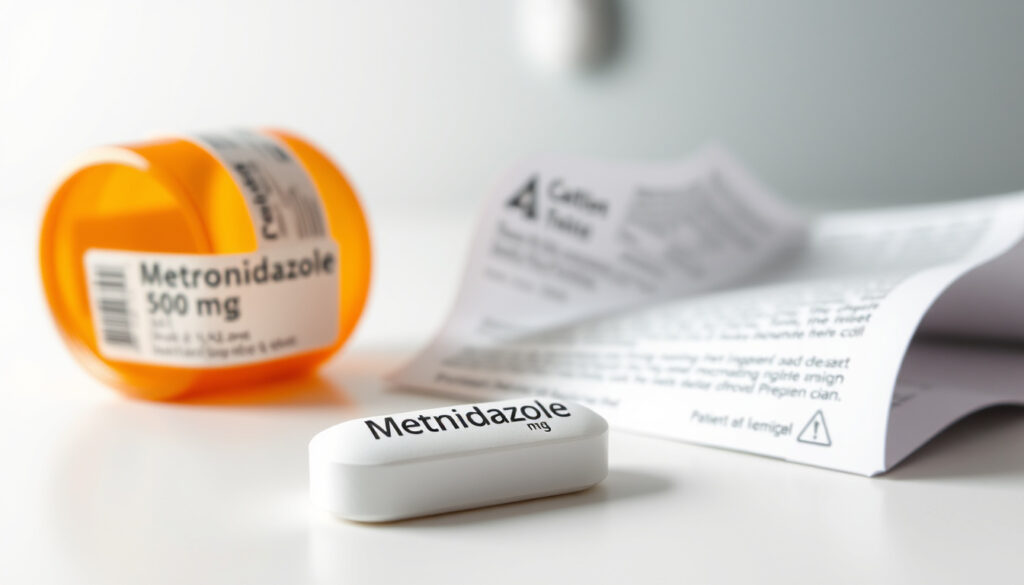
Metronidazole 500 mg: Uses, Dosage, Side Effects & Warnings
Anyone who’s been handed a prescription for a 500 mg metronidazole tablet quickly learns that a few strict rules come with it. The most important one? Absolutely no alcohol. This guide lays out exactly what this antibiotic treats, the correct way to take it over a seven-day course, and why the alcohol warning is a non-negotiable safety measure backed by multiple health authorities.
Drug class: Nitroimidazole antibiotic and antiprotozoal ·
Common dosage: 500 mg orally every 8 to 12 hours ·
Onset of action: Within 1 to 2 hours after oral intake ·
Half-life: Approximately 8 hours ·
Key interaction: Alcohol – severe disulfiram-like reaction
Quick snapshot
- Nitroimidazole antibiotic (MedlinePlus (U.S. National Library of Medicine))
- Antiprotozoal agent (MedlinePlus (U.S. National Library of Medicine))
- Bacterial vaginosis (NHS (UK health authority))
- Trichomoniasis (MedlinePlus (U.S. National Library of Medicine))
- Anaerobic infections (MedlinePlus (U.S. National Library of Medicine))
- Giardiasis (MedlinePlus (U.S. National Library of Medicine))
- Damages bacterial DNA (MedlinePlus (U.S. National Library of Medicine))
- Effective against anaerobic organisms (MedlinePlus (U.S. National Library of Medicine))
- Also targets certain protozoa (MedlinePlus (U.S. National Library of Medicine))
- No alcohol during treatment + 48 hours (NHS (UK health authority))
- May cause nerve damage if used long-term (MedlinePlus (U.S. National Library of Medicine))
- Take with food to reduce nausea (MedlinePlus (U.S. National Library of Medicine))
Six key attributes define this medication:
| Label | Value |
|---|---|
| Generic name | Metronidazole |
| Strength | 500 mg |
| Route of administration | Oral |
| Drug class | Nitroimidazole |
| Half-life | 8 hours |
| Common indication | Trichomoniasis, bacterial vaginosis, anaerobic infections |
What is metronidazole 500 mg used to treat?
Common bacterial infections treated with metronidazole
- Metronidazole is indicated for bacterial infections of the blood, brain, bone, lung, stomach lining, and pelvic area, according to MedlinePlus (U.S. National Library of Medicine).
- It is also used for urogenital trichomoniasis and other protozoal infections.
- MedlinePlus lists reproductive system, GI tract, skin, heart, bone, joint, lung, and blood infections.
Two protozoal infections effectively treated: trichomoniasis and giardiasis
- Metronidazole is a first-line treatment for trichomoniasis, a sexually transmitted infection caused by Trichomonas vaginalis.
- Giardiasis, a diarrheal disease caused by Giardia lamblia, also responds to metronidazole therapy.
Role in anaerobic infections
- Because it selectively targets anaerobic bacteria, metronidazole is often used in mixed infections involving the abdomen, pelvis, and dental abscesses.
- It is less effective against aerobic bacteria, which is why it is frequently combined with other antibiotics.
Patients taking metronidazole for a bacterial infection in the gut or pelvis are getting a drug that works precisely where oxygen is scarce — a niche that few other antibiotics fill.
The implication: Metronidazole’s anaerobic specificity makes it an irreplaceable option for certain deep-tissue infections.
Is metronidazole a strong antibiotic?
Mechanism of action: disruption of bacterial DNA
- Metronidazole enters bacterial cells where it is reduced by ferredoxin, forming DNA-damaging compounds that halt replication.
- This mechanism is selective for anaerobes and certain protozoa because they contain the reducing enzymes needed to activate the drug.
Spectrum of activity: broad against anaerobes and certain protozoa
- It covers Bacteroides fragilis, Clostridium species, and other obligate anaerobes.
- Protozoal targets include Trichomonas vaginalis, Giardia lamblia, and Entamoeba histolytica.
Comparison to other antibiotics
- Unlike amoxicillin or ciprofloxacin, metronidazole has little activity against aerobic Gram‑positive or Gram‑negative bacteria.
- It is often paired with a broad‑spectrum agent like ceftriaxone for empiric coverage of mixed infections.
A patient with a dental abscess and a patient with bacterial vaginosis are both prescribed the same 500 mg tablet — but for completely different bugs. That versatility is what makes metronidazole a staple in infection guidelines.
The pattern: Its narrow anaerobic spectrum, rather than broad power, is what makes metronidazole both potent and safe when used appropriately.
How to take metronidazole 500 mg twice a day for 7 days?
Standard adult dosing regimen
- Take one 500 mg tablet every 12 hours (twice daily) with food to reduce gastrointestinal upset.
- Swallow the tablet whole; do not crush or chew.
- Typical dose for many infections is 500 mg every 8 to 12 hours, as reported by Mayo Clinic (U.S. medical center).
- For a 7‑day course, most adults take one tablet twice daily every 12 hours.
Importance of completing the full course
- Stopping early can lead to treatment failure and promote antibiotic resistance.
- Even if symptoms improve, finish all doses as prescribed.
Missed dose instructions
- If you miss a dose, take it as soon as you remember unless it is almost time for the next dose. Never double up.
- Set a daily alarm or use a pill organizer to stay on schedule.
The catch: Consistency with timing and food is the difference between tolerating the course and abandoning it due to nausea.
What to avoid when taking metronidazole 500 mg?
Alcohol and metronidazole: severe reaction risks
- Alcohol must be avoided during therapy and for at least 48 hours after the last dose, per NHS (UK health authority). Some sources, including MedlinePlus (U.S. National Library of Medicine) and the FDA label (U.S. drug regulator), recommend at least 3 days.
- Reaction includes nausea, vomiting, flushing, headache, and difficulty breathing — a disulfiram‑like effect.
- Medical News Today (health journalism platform) also warns against alcohol‑containing products and propylene glycol.
Foods and beverages to limit
- No alcoholic beverages, including beer, wine, and spirits.
- Avoid mouthwashes, cough syrups, and desserts that contain alcohol or propylene glycol.
Drug interactions (e.g., warfarin, lithium)
- Metronidazole can enhance the effect of blood thinners like warfarin, increasing bleeding risk.
- It may also raise lithium levels, leading to toxicity.
- Always inform your doctor about all medications you take.
The alcohol warning is not a suggestion — it’s a direct consequence of the drug’s biochemical action. One drink can land a patient in urgent care with severe abdominal cramps and vomiting.
What this means: The alcohol interaction is the single most preventable cause of metronidazole‑related emergency visits.
What are the worst side effects of metronidazole?
Serious side effects: neurotoxicity and peripheral neuropathy
- Serious neurological effects include seizures, encephalopathy, and peripheral neuropathy (numbness/tingling in extremities).
- These are rare but warrant immediate medical attention if they occur.
Disulfiram-like reaction with alcohol
- As noted above, combining alcohol with metronidazole triggers a severe reaction that can mimic a disulfiram overdose.
- GoodRx (drug pricing and information platform) lists this as one of the top safety concerns.
Common side effects and when to seek medical help
- Nausea, metallic taste, diarrhea, and headache are the most frequent complaints, according to MedlinePlus (U.S. National Library of Medicine).
- Loss of appetite and upset stomach also occur.
- Seek help if you experience severe diarrhea, rash, or any neurological symptoms.
“Metronidazole is used to treat bacterial infections in different areas of the body.”
“Metronidazole can react with alcohol to cause side effects such as feeling or being sick, stomach pain, hot flushes, difficulty breathing.”
— NHS (UK health authority)
“Metronidazole is used to treat infections of the reproductive system, gastrointestinal tract, skin, heart, bone, joint, lung, blood.”
— MedlinePlus (U.S. National Library of Medicine)
For patients prescribed a 500 mg metronidazole tablet, the choice between a smooth recovery and a trip to the emergency room often comes down to one thing: alcohol. The evidence is clear — skip the drink, finish the course, and the drug does its job. Ignore that warning, and the consequences can be severe enough to send you back to the hospital.
phuketislandrehab.com, pillo.care, thecabinchiangmai.com, fda.report, goodrx.com, primroselodge.com
Frequently asked questions
Can I drive while taking metronidazole?
Metronidazole may cause dizziness or confusion in some people. If you experience these effects, avoid driving until you know how the drug affects you.
Is metronidazole safe during pregnancy?
Metronidazole is generally avoided in the first trimester unless essential. Speak with your doctor about the risks and benefits.
What is the brand name of metronidazole?
Flagyl is the most common brand name for metronidazole. It is also available under other brand names depending on the country.
Can metronidazole treat a urinary tract infection?
Metronidazole is not typically used for UTIs because most urinary pathogens are aerobic. It is reserved for anaerobic infections.
How should I store metronidazole tablets?
Store at room temperature, away from moisture and heat. Keep the tablets in their original container.
What should I do if I miss a dose of metronidazole?
Take the missed dose as soon as you remember. If it’s almost time for the next dose, skip the missed one. Do not double the dose.
Does metronidazole affect birth control pills?
Metronidazole does not typically reduce the effectiveness of hormonal birth control. However, if you experience vomiting or severe diarrhea, use a backup method.
More related posts
 Low Taper Textured Fringe: Men’s Styles, Tips & Guide
 Espanyol vs FC Barcelona Lineups: Derby History & Preview
 How to Get Oil Out of Clothes: Baking Soda, Dish Soap & More
 Amazon Vine Sign In: How to Access Your Account (2026 Guide)
 Charlie Kirk Death Video: Verified Facts and Latest Updates
 What Is a Fever – Thresholds, Causes, Symptoms and Care
 Giant Eagle Weekly Ad – Deals, Access and Savings Tips