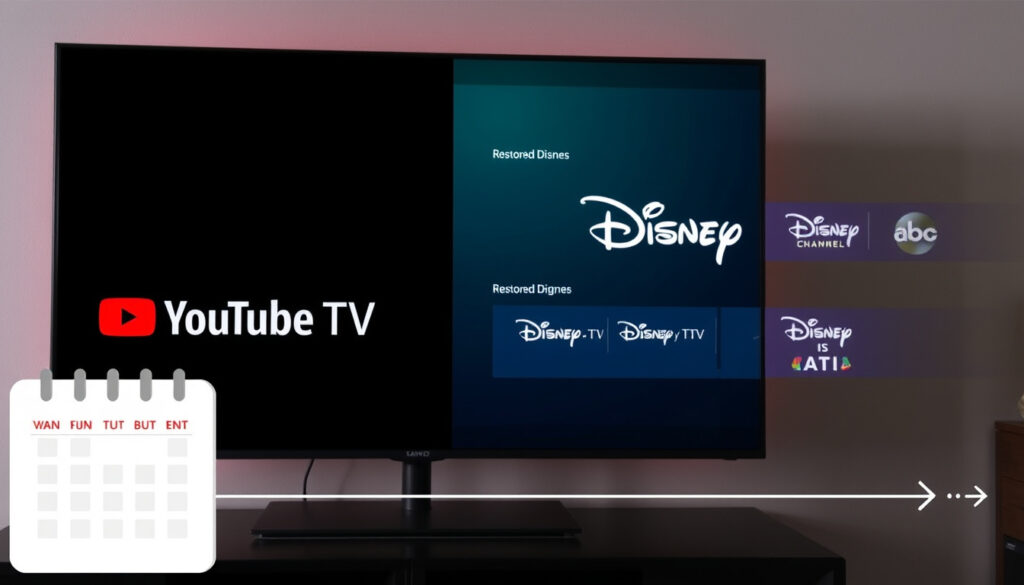
Youtube TV Disney Dispute – Blackout Timeline Resolution
Disney and YouTube TV faced a significant carriage dispute in late 2025 that resulted in approximately two weeks of channel blackouts affecting roughly 10 million subscribers. The disagreement centered on programming costs and contractual terms between the two media giants, disrupting access to popular networks including ESPN, ABC, and dozens of other Disney-owned channels.
The blackout represented the second major dispute between the companies in YouTube TV’s relatively short history. As negotiations stalled, subscribers lost access to live sports, news programming, and entertainment content just as the college football season reached critical stages. The standoff finally ended on November 15, 2025, when both parties announced a new multi-year agreement restoring all affected channels to the platform.
What Caused the YouTube TV and Disney Dispute?
The conflict stemmed from disagreements over carriage fees—the rates that YouTube TV pays Disney to distribute its channels to subscribers. According to statements from YouTube TV, Disney proposed what the platform described as “costly economic terms” that would inevitably lead to higher customer prices while simultaneously giving preferential treatment to Disney’s own streaming products like Hulu.
Carriage disputes occur when distributors and content owners cannot agree on the fees for carrying programming. These disagreements often result in temporary blackouts that affect millions of viewers.
October 30, 2025
Carriage fees and pricing terms
ABC, ESPN, FX, and 17 other networks
Approximately two weeks
YouTube TV’s Position
YouTube TV maintained that it had been “working in good faith” to negotiate fair terms with Disney. The platform accused Disney of using the blackout as a negotiating tactic designed to benefit competing streaming services such as Hulu + Live TV and Fubo, suggesting that Disney was prioritizing its direct-to-consumer strategies over existing partnership relationships.
Disney’s Position
Disney countered that YouTube TV refused to pay fair rates for its channels and accused Google of “using its market dominance to eliminate competition” in the streaming distribution space. Disney also criticized YouTube TV for removing content “prior to the midnight expiration” of their contract, characterizing the early pull as bad-faith dealing. The company argued it deserved equitable compensation for its programming portfolio, which included highly valuable sports rights.
- The dispute highlighted ongoing tensions between traditional distributors and content creators over streaming economics
- Disney’s broader pattern of extended blackouts with multiple providers suggested a strategic approach to fee negotiations
- Sports rights emerged as the central battleground, with ESPN representing the most valuable asset in Disney’s portfolio
- YouTube TV’s accusation of favoritism toward Hulu raised questions about fair competition in the streaming market
- Subscriber impact became a public relations challenge for both companies during the two-week outage
- The early removal of channels before official contract expiration marked a notable escalation in negotiation tactics
- Resolution required both parties to make concessions on their publicly stated positions
| Fact | Details |
|---|---|
| Duration | Approximately two weeks (October 30 – November 15, 2025) |
| Subscribers Affected | Roughly 10 million |
| Channels Lost | Approximately 20 Disney-owned networks |
| Sports Impact | College football matchups and professional sports games disrupted |
| Subscriber Compensation | $20 credit (manually redeemed) |
| Previous Dispute | December 2021 (lasted less than three days) |
Which Disney Channels Were Affected?
The blackout removed approximately 20 Disney-owned channels from YouTube TV’s channel lineup. Sports programming suffered the most significant impact, with ESPN and ESPN2 going dark during a critical period of the college football season. Subscribers also lost access to ABC, which meant missing local news, popular entertainment programming, and broadcast sports events.
The affected networks represented a substantial portion of YouTube TV’s sports and entertainment content, including Disney’s most valuable broadcast and cable properties.
The complete list of affected channels included:
- ESPN and ESPN2
- ABC network affiliates
- SEC Network
- ACC Network
- FX
- Freeform
- National Geographic (NatGeo)
- Disney Channel
- 14 additional Disney-owned networks
Impact on Sports Coverage
The loss of ESPN networks proved particularly damaging to subscribers. College football matchups were in full swing during the blackout period, and professional sports leagues continued their schedules uninterrupted while viewers had no way to access coverage through YouTube TV. The timing of the dispute—occurring midseason for multiple sports—amplified subscriber frustration and increased pressure on both companies to reach a resolution quickly.
For those seeking alternatives during the blackout, finding appropriate viewing options became a priority. Many subscribers looked to other streaming platforms or traditional cable services to maintain access to their preferred sports content.
Timeline of the YouTube TV Disney Blackout
The dispute followed a predictable but nonetheless frustrating pattern for subscribers. Understanding the sequence of events helps contextualize how the blackout unfolded and why it persisted for nearly two weeks before resolution.
- YouTube TV publicly announced it had been negotiating in good faith but accused Disney of proposing unsustainable terms that would raise prices for customers.
- YouTube TV removed all Disney-owned channels approximately 30 minutes before the contract officially expired, marking the beginning of the formal blackout.
- Disney requested that YouTube TV temporarily restore ABC programming for Election Day (November 4), framing the request as serving the “public interest.” YouTube TV declined, counter-proposing that Disney restore both ABC and ESPN while negotiations continued.
- Disney and YouTube TV announced a new multi-year agreement, ending the blackout after approximately two weeks. The full suite of Disney networks was restored to the platform.
The resolution came just in time for subscribers to access college football programming over the following weekend. Disney issued a statement saying it was “pleased that our networks have been restored in time for fans to enjoy the many great programming options this weekend, including college football.”
Impact on YouTube TV Subscribers and Resolution
The blackout imposed immediate practical consequences on YouTube TV’s subscriber base. Beyond the inconvenience of losing access to favorite channels, subscribers faced real gaps in their ability to watch live sporting events that had been scheduled weeks in advance. The timing coincided with pivotal college football games and ongoing professional sports seasons, intensifying dissatisfaction among affected viewers.
Compensation Offered
YouTube TV responded to subscriber complaints by offering a $20 credit to those impacted by the outage. However, the credit required manual redemption through the platform’s interface, meaning subscribers had to actively seek out and claim the compensation rather than receiving it automatically. This approach drew criticism as being insufficient given the duration of the service disruption.
The $20 credit was not automatically applied to subscriber accounts. Users needed to navigate to their account settings and manually redeem the offer during the blackout period.
Resolution Details
The November 15, 2025 agreement restored Disney’s complete network portfolio to YouTube TV. Both companies characterized the resolution as a win, though specific financial terms remained confidential as is typical for carriage agreements. The deal was described as a multi-year arrangement, suggesting stability for subscribers through at least the near term.
The restoration allowed subscribers to resume watching their preferred content immediately, with the timing positioned to capture viewership for weekend college football broadcasts. This represented the second carriage agreement reached between the two companies, following an earlier dispute in December 2021 that resolved within three days.
Certainty and Uncertainty
Available reporting provides clear information on several aspects of the dispute while leaving other details undisclosed or unclear.
Established information
- The blackout ran from October 30 to November 15, 2025
- Approximately 20 Disney channels were removed
- Roughly 10 million subscribers were affected
- The previous dispute occurred in December 2021 and lasted less than three days
- A $20 credit was offered to impacted subscribers
- The agreement was described as multi-year in duration
Unclear or undisclosed
- Specific financial terms and fee structures remain private
- Whether subscriber pricing changed as a result of the deal
- The exact expiration date of the new agreement
- Details of any guarantees regarding future blackouts
- Whether Disney made concessions on its stated positions
- The precise timeline of private negotiations between October 30 and November 15
Historical Context
The 2025 YouTube TV Disney blackout was not an isolated incident but rather part of a broader pattern of carriage disputes involving Disney’s valuable content portfolio. The company’s aggressive stance on programming fees had resulted in similar extended outages with other major distributors in preceding years.
In 2023, Disney experienced an 11-day dispute with Charter Communications that disrupted service for Spectrum cable subscribers. The following year brought a 13-day standoff with DirecTV customers, again leaving viewers without access to ESPN, ABC, and other Disney networks. This pattern suggested a deliberate negotiating strategy on Disney’s part, using temporary blackouts as leverage to secure more favorable terms from distributors.
For YouTube TV specifically, the 2025 dispute marked the second major confrontation with Disney. The earlier December 2021 blackout had resolved relatively quickly—lasting less than three days—giving subscribers hope that the 2025 version might follow a similar trajectory. Instead, the later dispute extended nearly five times longer, testing subscriber patience and raising questions about whether the relationship between the two companies had fundamentally changed.
Sources and Official Statements
Both companies issued public statements throughout the dispute that illuminated their respective positions. YouTube TV’s October 23 statement accused Disney of proposing “costly economic terms” while maintaining that the platform had been “working in good faith” toward a resolution. The platform characterized its removal of channels as occurring “prior to the midnight expiration” of the contract, though Disney disputed this characterization.
Disney stated it was “pleased that our networks have been restored in time for fans to enjoy the many great programming options this weekend, including college football.”
— Disney press statement, November 15, 2025
Disney’s public position emphasized that YouTube TV had refused to pay “fair rates” for its channels and accused Google of leveraging its market position to undermine competitive alternatives. The company’s internal analysis, as reported through business coverage, framed the dispute as part of a broader effort to ensure Disney receives appropriate compensation for its extensive sports rights holdings.
Coverage from multiple outlets documented the subscriber experience during the outage. Sports fans specifically highlighted the impact on their ability to follow college football games, with some noting they had considered canceling their subscriptions in favor of competitors’ services. The subscriber frustration reported through various media channels may have contributed pressure toward resolution.
Summary
The YouTube TV Disney dispute of October-November 2025 demonstrated the ongoing tensions in the streaming distribution landscape. Approximately 10 million subscribers lost access to roughly 20 Disney channels for about two weeks, with sports coverage suffering the most significant impact during an active college football season. The blackout ended on November 15, 2025, when both companies announced a new multi-year agreement restoring all affected networks. YouTube TV offered a $20 credit to impacted subscribers, though the credit required manual redemption. The dispute marked the second major carriage conflict between the companies, following a 2021 outage that resolved in under three days, and fit within a broader pattern of Disney engaging in extended negotiations with major distributors. For those tracking sports coverage availability, finding appropriate viewing options remains relevant during similar future disruptions.
Frequently Asked Questions
How long did the YouTube TV Disney blackout last?
The blackout lasted approximately two weeks, from October 30, 2025, until November 15, 2025, when both companies announced a resolution.
How many subscribers were affected by the YouTube TV Disney blackout?
Roughly 10 million YouTube TV subscribers lost access to Disney-owned channels during the dispute.
What channels were removed during the YouTube TV Disney dispute?
Approximately 20 Disney-owned channels were affected, including ESPN, ESPN2, ABC, SEC Network, ACC Network, FX, Freeform, National Geographic, Disney Channel, and 14 additional networks.
Was there any compensation offered to affected subscribers?
YouTube TV offered affected subscribers a $20 credit, though it required manual redemption through account settings rather than being automatically applied.
How does this dispute compare to previous YouTube TV Disney conflicts?
The 2025 blackout was notably longer than a previous dispute in December 2021, which resolved in less than three days.
What was the main cause of the dispute?
The conflict centered on carriage fees—YouTube TV argued Disney proposed unsustainable terms that would raise customer prices, while Disney claimed YouTube TV refused to pay fair rates for its programming.
Did Disney have similar disputes with other providers?
Yes, Disney experienced extended blackouts with other major providers in consecutive years, including an 11-day dispute with Charter in 2023 and a 13-day standoff with DirecTV in 2024.
Does YouTube TV currently carry Disney channels?
Yes, the November 15, 2025 agreement restored Disney’s full suite of networks to YouTube TV under a new multi-year deal.
More related posts
 Michelin Star Restaurants Near Me – Your Local Fine Dining Guide
 Lakers vs Orlando Magic Match Player Stats & Box Scores
 Why Did the Chicken Cro the Road? Joke, Game & Ri k
 Commanders vs Falcons Match Player Stats: Mariota, Penix & More
 Kelvin Harrison Jr.: Bio, Movies, Ethnicity, Mufasa Role
 Charlie Kirk Death Video: Verified Facts and Latest Updates
 Somewhere Over the Rainbow – Lyrics, History, Meaning and Covers
 Jelly Roll and Bunnie XO Divorce: Reasons & Timeline 2026