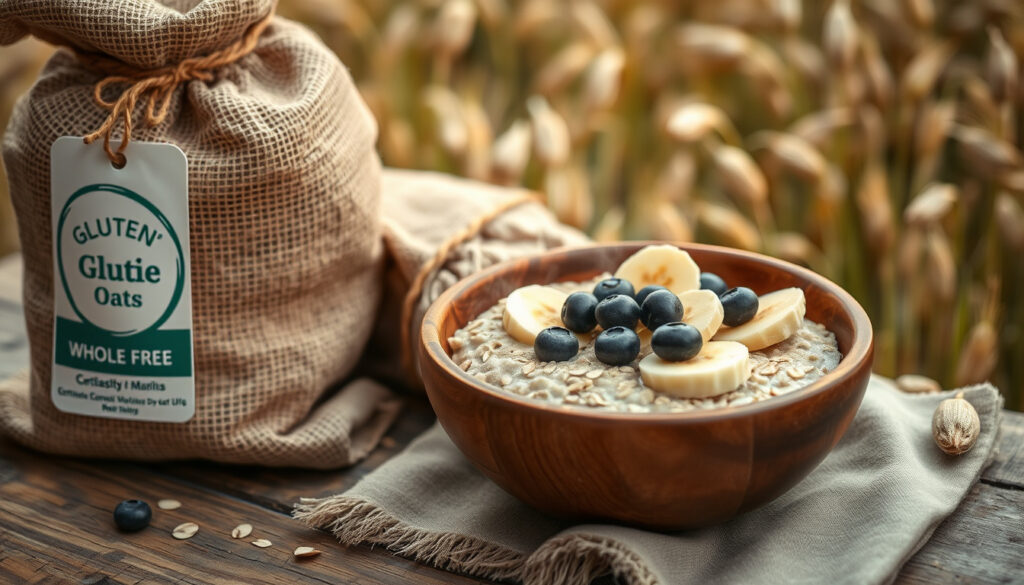
Is Oatmeal Gluten Free? Safe Oats Guide
Oats are the only grain that is inherently gluten-free yet regularly contaminated by the very grains celiacs must avoid — the safety of your breakfast depends entirely on the supply chain, not the grain itself. This guide cuts through the confusion to explain which oats are truly safe, how to read labels, and what your breakfast options look like.
Oats naturally gluten‑free: yes ·
FDA gluten‑free threshold: < 20 ppm ·
Most celiac patients can eat pure oats: yes ·
Cross‑contamination risk in conventional oats: high ·
Gluten‑free oat purity standard: mechanical/optical sorting ·
Avenin reaction risk (rare): < 1% of celiacs
Quick snapshot
- Oats are inherently gluten‑free (Beyond Celiac (celiac research nonprofit)).
- Cross‑contamination makes many conventional oats unsafe for celiacs (Celiac Canada (leading Canadian celiac authority)).
- Gluten‑free labeled oats are safe for the majority of celiac patients (PMC review (peer‑reviewed journal)).
- A small subset may react to avenin (Coeliac Australia (national patient organisation)).
- Exact prevalence of avenin sensitivity across populations (PMC review).
- Long‑term effects of frequent oat consumption in celiac disease are still under study (Frontiers in Nutrition (academic journal)).
- Present: major retailers and brands now offer gluten‑free certified oat products (Celiac Disease Foundation (patient advocacy group)).
- More growers expected to adopt Foundation #1 purity standard (0–1 contaminant seed per kg of oat groats) (PMC review).
The paradox: oats are the only grain that is inherently gluten‑free yet regularly contaminated by the very grains celiacs must avoid. The safety of your breakfast bowl depends entirely on the supply chain, not the grain itself.
Five key facts about oats and gluten, drawn from regulators and clinical studies, show where the line between safe and unsafe lies.
| Label | Value | Source |
|---|---|---|
| Oats natural state | Gluten‑free | Beyond Celiac |
| FDA gluten‑free limit | < 20 ppm | U.S. FDA (federal regulator) |
| Celiac tolerance to pure oats | Most can eat | PMC review |
| Avenin reaction rate | Less than 1% | Coeliac Australia |
| Cross‑contamination risk | High in conventional oats | Celiac Canada |
Is oatmeal ok for a gluten‑free diet?
Yes, but only when the oats are specifically labeled gluten‑free. Pure, uncontaminated oats are considered safe for most people with celiac disease, as concluded by Health Canada (federal health authority). The catch: the majority of oats on grocery shelves are not pure.
Understanding pure oats vs. cross‑contaminated oats
- Pure oats are mechanically or optically sorted to remove wheat, barley, and rye kernels. The Canadian Celiac Association’s Foundation #1 seed standard permits only 0–1 contaminant seed per kg of oat groats (PMC review).
- Conventional oats are often grown in rotation with wheat and processed in shared facilities. A 2022 study found gluten above 5 ppm in 40% of gluten‑free labeled oat products and above 20 ppm in 36% of such products (PMC / peer‑reviewed study).
The FDA labeling rule and ppm threshold
- In the United States, oats labeled gluten‑free must contain less than 20 parts per million gluten (U.S. FDA (federal regulator)).
- The FDA allows oats in gluten‑free labeled foods; there is no requirement that oats be specially processed, only that the final product meet the threshold (Frontiers in Nutrition (academic journal)).
The pattern: a gluten‑free label on oats is a guarantee of compliance, not necessarily of purity. The 2022 study found no significant difference in gluten levels between labeled and unlabeled oat products when positive samples were compared (PMC study).
What grains have no gluten?
Knowing which grains are naturally gluten‑free helps you build a safe pantry beyond oats.
List of naturally gluten‑free grains
- Rice, corn, quinoa, millet, sorghum, buckwheat, amaranth, teff
- Pure, certified oats (if labeled gluten‑free)
These grains are safe for celiacs when not cross‑contaminated during processing (Beyond Celiac (celiac research nonprofit)).
Grains that always contain gluten
- Wheat (including spelt, farro, durum), barley, rye, triticale
- Malt (from barley) and brewer’s yeast may also contain gluten
Coeliac Australia (national patient organisation) advises celiacs to avoid these grains entirely and to watch for cross‑contact in processed foods.
The implication: while many gluten‑free grains are available, few offer the same soluble fiber as oats — which is why finding safe oats matters for heart and gut health.
What is a good gluten‑free breakfast?
Starting the day without gluten doesn’t mean skipping hearty meals. Gluten‑free oatmeal tops the list of popular options.
Hot cereal options like gluten‑free oatmeal
- Certified gluten‑free oats cooked with milk or water, topped with fruit, nuts, or seeds (Celiac Disease Foundation (patient advocacy group)).
- Buckwheat porridge, quinoa bowls, and cream of rice are also safe.
Eggs, yogurt, smoothies, and gluten‑free toast
- Omelets with vegetables and cheese, Greek yogurt with berries, and smoothies made with gluten‑free protein powder are quick options.
- Gluten‑free toast with avocado or nut butter provides long‑lasting energy.
The implication: a 2023 survey in Frontiers in Nutrition noted that breakfast is the meal celiacs most often struggle with when eating away from home. Prepping your own safe oatmeal removes that anxiety.
Do porridge oats contain gluten?
Standard porridge oats often contain traces of gluten because of shared facilities with wheat, barley, and rye.
Standard porridge oats risk of cross‑contamination
- In North America, most commercially available oats are contaminated (Celiac Canada).
- Coeliac Australia says only specially produced oats free of contamination may be suitable (Coeliac Australia).
Certified gluten‑free porridge oats availability
- Many major retailers now stock gluten‑free labeled porridge oats. Quaker Oats, for example, offers a gluten‑free line that is mechanically sorted and tested (Celiac Disease Foundation).
- Flahavan’s also produces a gluten‑free range.
The catch: even with certification, the 2022 study found that 36% of gluten‑free labeled oat products had gluten above 20 ppm (PMC study). So brand loyalty matters, but no brand is 100% bulletproof.
Why do some doctors say not to eat oats?
Even when oats are pure, a very small number of celiac patients react to avenin, a protein in oats that is similar to gluten.
Avenin sensitivity in a small subset of celiac patients
- Less than 1% of people with celiac disease have an immune reaction to avenin (Coeliac Australia).
- Older clinical guidance suggested adults could safely eat 50–70 g per day of pure oats; children 20–25 g per day (PMC review).
Inconsistent labeling and trace contamination concerns
- Until strict purity protocols became available, doctors advised caution because contamination was rampant. Now, with gluten‑free certification, most celiacs can reintroduce oats (Celiac Disease Foundation).
The implication: the old blanket advice to avoid all oats is outdated for the vast majority. However, patients who are newly diagnosed should introduce oats under medical supervision and start with small amounts.
A small minority of celiac patients experience gut symptoms even with pure oats. If you have persistent symptoms after eating certified gluten‑free oats, talk to your gastroenterologist about avenin sensitivity testing.
What’s surprisingly not gluten‑free?
Several everyday foods contain hidden gluten, and unlabeled oats are one of the most common traps.
Oats without gluten‑free label
- Beyond Celiac says oats without a gluten‑free label are not considered safe for people with celiac disease (Beyond Celiac).
- This includes bulk‑bin oats, instant oatmeal packets not labeled gluten‑free, and “organic” oats that lack certification.
Other hidden gluten sources
- Soy sauce (brewed with wheat), certain candies (malt barley), beer (barley), malt vinegar, and some packaged broths.
- Always check ingredient labels for “malt,” “hydrolyzed wheat protein,” and “brewer’s yeast.”
The pattern: the surprising items are often the ones where gluten is used as a thickener or flavor carrier. When in doubt, stick to whole, unprocessed foods and certified gluten‑free labels.
Buying certified gluten‑free oats often costs twice as much as conventional oats. For a family with celiac disease, that premium is a necessary safety cost. For casual gluten‑free dieters, the extra expense may not be medically justified.
For celiac patients and their families, the choice is clear: choose only Certified Gluten‑Free oats, and treat conventional oats as a hidden gluten source alongside soy sauce and beer. For those with non‑celiac gluten sensitivity, the risk is lower but the label still offers peace of mind.
Related reading: What Is Processed Food? · How Much Vitamin D3 Per Day for a Woman?
celiacjourney.com, pmc.ncbi.nlm.nih.gov, celiac.org, shop.gfjules.com, fda.gov
For those wondering about the safety of certified oats, the safety of certified oats provides a detailed breakdown of contamination risks and safe brands.
Frequently asked questions
Are gluten‑free oats safe for everyone?
No. While safe for the vast majority of celiac patients, a tiny number may react to avenin. Always introduce them gradually after consulting your healthcare team (Coeliac Australia).
Can I eat oatmeal if I have celiac disease?
Yes, if the oatmeal is made from certified gluten‑free oats. Most celiac organizations endorse pure, uncontaminated oats (Celiac Disease Foundation).
What does gluten‑free label mean on oat products?
It means the product contains less than 20 ppm gluten as required by the FDA (U.S. FDA). However, some studies show contamination can exceed this limit even in labeled products (PMC study).
Do I need to buy special oatmeal for a gluten‑free diet?
Yes, if you have celiac disease. Only oats specifically labeled gluten‑free are considered safe. Regular oatmeal from the grocery aisle is likely contaminated (Celiac Canada).
Are instant oatmeal packets gluten free?
Only if the packet is labeled gluten‑free. Many instant oatmeal brands use shared equipment and may contain traces of wheat or barley (Beyond Celiac).
What is the difference between gluten‑free oats and regular oats?
Both start as the same grain. Gluten‑free oats are mechanically or optically sorted to remove stray wheat, barley, and rye kernels, and they are tested to ensure gluten levels below 20 ppm (PMC review).
Can gluten‑free oats cause gas or bloating?
Yes, some people experience bloating from the high soluble fiber content in oats, even without celiac disease. This is not a gluten reaction but a digestive adjustment (Frontiers in Nutrition).
Are all Quaker oat products gluten free?
No. Only Quaker products labeled “Gluten Free” on the package are safe. Their regular quick oats and old‑fashioned oats are not certified and may contain traces of gluten (Celiac Disease Foundation).
More related posts
 When Does Landman Season 2 Start – November 16 on Paramount+
 Honduras vs. Curazao – 2-1 Win in Dramatic Gold Cup Clash
 What Is ALT in Blood Test? Normal Range, High Levels & Causes
 Boston Celtics vs San Antonio Spurs Player Stats Mar 10, 2026
 Espanyol vs FC Barcelona Lineups: Derby History & Preview
 Never Gonna Give You Up: Rick Astley’s Hit and the Rickroll Meme
 Hamnet (2025 Film): True Story, Cast & Where to Watch
 What Is Processed Food? Examples, Health Effects, and More