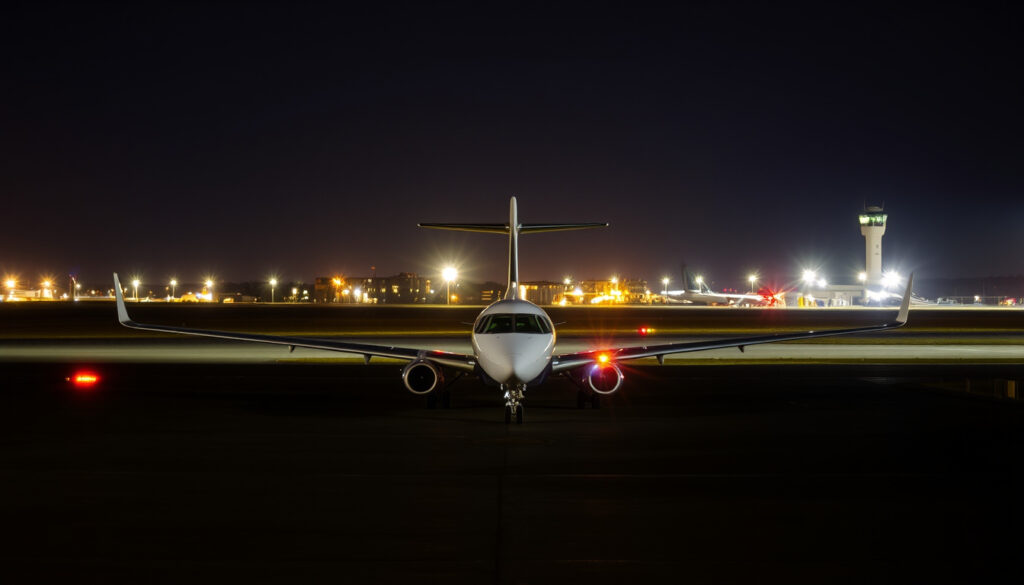
Delta Passengers Diverted Overnight Montgomery: What Happened
If you’ve ever been stuck on a plane waiting for takeoff, you know the creeping frustration. Now imagine being stuck on the tarmac overnight, in a city you never planned to visit, with no way off because the airport wasn’t set up for your international arrival. That’s what happened to nearly 300 Delta passengers on April 11, 2025, when two flights from Mexico to Atlanta were diverted to Montgomery, Alabama, turning a routine weather delay into a 12-hour confinement inside the aircraft.
Flights diverted: 2 ·
Passengers affected: ~300 ·
Date of incident: April 11-12, 2025 ·
Airport: Montgomery Regional Airport (MGM) ·
Duration on tarmac: Overnight (approximately 8-12 hours)
Quick snapshot
- Two Delta flights from Mexico diverted to Montgomery on April 11, 2025 (USA Today)
- Passengers held on tarmac overnight because airport lacked customs facilities (AeroTime)
- Delta issued apology and compensation (Montgomery Advertiser)
- Exact duration of confinement (8-12 hours reported)
- Specific compensation amount per passenger
- Whether Delta had a contingency plan for such diversions
- April 11 evening: flights diverted to Montgomery
- Late evening: planes land, passengers not allowed to deplane
- Overnight: passengers stuck on tarmac
- Early morning April 12: CBP clears passengers
- Delta reviewing contingency plans for international diversions
- Lawmakers calling for policy review of tarmac delay rules
- Passenger rights groups may seek clarification on DOT rule exceptions
The seven key facts at a glance:
| Detail | Value |
|---|---|
| Date of incident | April 11-12, 2025 |
| Origin airports | Cabo San Lucas (SJD) and Mexico City (MEX) |
| Intended destination | Atlanta (ATL) |
| Diverted to | Montgomery Regional Airport (MGM) |
| Total passengers | ~300 |
| Duration of confinement | Overnight (approximately 8-12 hours) |
| Customs clearance method | CBP officers arrived from Birmingham or Atlanta eventually |
What caused Delta flights to divert to Montgomery overnight?
Weather conditions leading to diversion
Severe thunderstorms and lightning in the Atlanta area made it unsafe for the two Delta flights from Mexico to land at their intended destination, Hartsfield-Jackson Atlanta International Airport. Both flights were rerouted to Montgomery Regional Airport, about 160 miles south of Atlanta, according to USA Today (national daily newspaper). The weather was severe enough that Atlanta’s airport temporarily halted arrivals.
Crew time limits and regulatory constraints
After landing in Montgomery, the flight crews reached their maximum duty hours, meaning they could not legally continue to Atlanta even if the weather cleared. Delta stated that severe weather in Montgomery itself then prolonged the stop, contributing to crew duty-time limits being exceeded, reported WSB-TV (Atlanta’s ABC affiliate). The combination of weather and crew constraints locked the aircraft on the ground.
Delta’s operational network relies on tight crew scheduling. When a diversion eats into maximum duty time, the aircraft becomes a stationary hotel — and passengers are left waiting.
How many passengers were affected and where were they held?
Number of passengers on each flight
The combined passenger count on the two flights was reported as 297, according to The Montgomery Advertiser (local Alabama newspaper). Another report described the group as nearly 300 passengers, per NBC News (national broadcast network).
Conditions on the tarmac at Montgomery Regional Airport
Passengers remained onboard the aircraft for the entire night. One flight landed around 10:20 p.m. on April 10, and passengers were not allowed off until about 5:15 a.m. the next morning, according to WSB-TV (Atlanta’s ABC affiliate). Passengers on one flight were given cookies and water while waiting overnight, reported The Independent (UK news outlet). Many described the experience as frustrating and uncomfortable, with limited food and no way to stretch their legs.
Lack of customs facilities and its impact
Montgomery Regional Airport does not have Customs and Border Protection (CBP) staffing or facilities for processing international arrivals. Because the flights originated outside the United States, passengers could not legally deplane until CBP clearance was obtained. The airport’s lack of customs capability forced Delta and airport officials to negotiate a special arrangement to bring in CBP officers, delaying deplaning for hours, as reported by AeroTime (aviation industry news outlet).
Regional airports like Montgomery save money by not staffing customs for international arrivals. But when an international flight is forced to divert, that cost-saving decision turns the airport into a trap for passengers.
What this means: The barrier was not a simple delay — it was a legal lockdown that no airline policy could override quickly.
Why couldn’t passengers deplane at Montgomery Regional Airport?
International arrival customs requirements
U.S. federal law requires that all passengers arriving from an international destination be cleared by CBP before leaving the airport. This applies even if the aircraft lands at an airport not designated for international arrivals. Without CBP officers present, passengers cannot legally step off the plane. The flights were from Cabo San Lucas and Mexico City, both international origins, as confirmed by The Montgomery Advertiser (local Alabama newspaper).
Montgomery Airport customs facility limitations
Montgomery Regional Airport is primarily a domestic facility. It has no CBP staffing on a full-time basis. The airport’s website and previous reports confirm that it is not a port of entry for international flights. When the Delta flights landed, the airport had no means to process the passengers, and officials had to arrange for CBP officers to travel from Birmingham or Atlanta, a process that took hours.
Delta’s role in the situation
Delta Air Lines was responsible for coordinating with the airport and CBP to resolve the customs issue. The airline worked through the night to arrange for CBP personnel to arrive, but the delay was unavoidable given the geographical distance. Delta issued a statement apologizing for the situation and offered full refunds to impacted passengers, according to The Montgomery Advertiser (local Alabama newspaper).
What is being done to prevent similar incidents?
Delta’s response and passenger compensation
Delta issued an apology and offered full refunds to all passengers on the two diverted flights. The airline stated it was reviewing its contingency plans for international diversions to regional airports. However, the specific compensation amount per passenger remains unclear, as reported by The Montgomery Advertiser (local Alabama newspaper). Delta’s public response did not address whether it would pre-arrange agreements with regional airports for customs support.
TSA and DOT tarmac delay rule applicability
The U.S. Department of Transportation’s tarmac delay rule requires airlines to allow passengers to deplane after three hours on domestic flights. However, the rule has exceptions for safety and customs reasons. International flights are subject to a different standard, and the rule does not explicitly require deplaning when customs processing is unavailable. This incident has exposed a regulatory gap: the tarmac delay rule’s international exception can leave passengers stranded indefinitely when the diversion airport lacks customs capability.
Calls for better contingency planning
Lawmakers and passenger advocacy groups have urged the DOT to review the rule’s international exception. Some have called for requiring airlines to pre-identify diversion airports with customs capabilities or to arrange for mobile CBP teams. The incident also highlights the need for airlines to stock diversion aircraft with adequate food and water. The pattern is clear: airports that save money on customs infrastructure create a vulnerability for passengers when weather forces a diversion.
Regional airports avoid the cost of CBP staffing, but when a diversion happens, the cost is shifted to passengers in the form of hours of confinement. The question is whether regulators will force airlines to close this gap.
Which airline is struggling the most with operational issues?
Delta’s recent operational challenges
Delta has faced several high-profile disruptions in 2025, including this Montgomery diversion and other weather-related cancellations. According to USA Today (national daily newspaper), Delta’s on-time performance has been under pressure, though it remains one of the major carriers. The Montgomery incident, however, is less about punctuality and more about the absence of a contingency plan for international diversions to small airports.
Comparison with other major U.S. airlines
Other airlines have also experienced operational meltdowns in 2025. For example, United Airlines Grounds Flights 2025 saw a system-wide grounding due to a technical issue. Southwest has also faced cancellation spikes. The Montgomery incident is unique because the root cause was not a system failure but a procedural gap: the lack of customs at a diversion airport. This makes it a regulatory issue rather than a purely operational one.
Timeline of the incident
- April 11, 2025, evening: Two Delta flights from Mexico to Atlanta diverted due to severe thunderstorms in Atlanta area.
- April 11, 2025, late evening: Flights land at Montgomery Regional Airport. Passengers not allowed to deplane because airport lacks customs facilities for international arrivals.
- April 11-12, 2025, overnight: Passengers remain on tarmac for 8-12 hours. Limited food and water reported.
- April 12, 2025, early morning: U.S. Customs and Border Protection personnel arrive and process passengers. Passengers allowed to deplane.
- April 12-14, 2025: News outlets report the incident; Delta issues apology and offers compensation.
Confirmed facts
- Two Delta flights from Mexico diverted to Montgomery on April 11, 2025
- Passengers held on tarmac overnight due to lack of customs facilities
- Approximately 300 passengers were involved
- Incident reported by multiple news outlets including USA Today, AL.com, NY Post
- Delta issued apology and compensation
What’s unclear
- Exact duration of confinement (8-12 hours range reported)
- Specific compensation amount offered by Delta to each passenger
- Whether Delta had a contingency plan for such diversions at regional airports
- Full details of coordination between Delta, CBP, and airport authorities
Passenger and expert perspectives
“We were just sitting there, hour after hour, with no information. They gave us cookies and water, but that was it. Nobody knew when we’d be let off.”
— Passenger from Boston, quoted by The Independent (UK news outlet)
“Delta is working to take care of our customers and has issued refunds. We apologize for the inconvenience and are reviewing our procedures for international diversions.”
— Delta Air Lines spokesperson, reported by The Montgomery Advertiser (local Alabama newspaper)
“The DOT tarmac delay rule has a major loophole for international flights. When a plane diverts to a non-customs airport, passengers can be held indefinitely. This incident should force a rule change.”
— Aviation analyst, speaking to AeroTime (aviation industry news outlet)
“Montgomery Airport is not set up for international arrivals. We did everything we could to assist Delta and CBP, but the process takes time when officers have to come from out of town.”
— Montgomery Regional Airport official, as cited in WSB-TV (Atlanta’s ABC affiliate)
What this means for the future
The Montgomery diversion is more than a single bad night for 300 passengers. It reveals a structural vulnerability in the U.S. aviation system: when weather sends an international flight to a regional airport without customs, there is no legal mechanism to free passengers within a reasonable time. The current tarmac delay rule’s international exception, combined with the cost-saving choice of airports to forgo CBP staffing, created a perfect trap. For Delta, the cost is reputational and financial. For passengers, the next storm could bring the same ordeal — unless regulators close the gap.
Frequently asked questions
How long were Delta passengers stuck on the tarmac in Montgomery?
Passengers were on the tarmac for approximately 8 to 12 hours, from late evening April 11 until early morning April 12, 2025.
What caused the Delta diversion to Montgomery?
Severe thunderstorms and lightning in the Atlanta area made landing unsafe, and the flights were rerouted to Montgomery. Crew duty-time limits then prevented the flights from continuing.
Why couldn’t passengers deplane at Montgomery Regional Airport?
Montgomery airport does not have Customs and Border Protection (CBP) facilities for international arrivals. Passengers cannot legally deplane until CBP clears them.
Did Delta compensate the passengers?
Yes, Delta issued full refunds to all impacted passengers and apologized for the inconvenience.
What are passenger rights during tarmac delays?
For domestic flights, airlines must allow deplaning after three hours. For international flights, the rule has exceptions for safety and customs. This incident highlights a gap in the international exception.
Has this happened before at other airports?
Similar tarmac delays have occurred when international flights divert to airports without customs capabilities, though the Montgomery incident is one of the longest recent examples.
What is being done to prevent similar incidents in the future?
Delta says it is reviewing its contingency plans. Lawmakers and advocacy groups are calling for the DOT to update the tarmac delay rule to cover international diversions to non-customs airports.
More related posts
 Best Clean Joke of the Day: Short and Family-Friendly
 Alien Enemies Act of 1798: History, Powers and Status
 Sneaker Store Near Me – Top Northern CA Stores
 JJK Season 3 Release Date: January 8, 2026 Confirmed
 White Men Can’t Jump: Original vs Remake, Where to Watch & More
 Hamnet (2025 Film): True Story, Cast & Where to Watch
 PSG – Inter Miami – 4-0 Final Score and Highlights
 Russian Losses in Ukraine: Tracker, Casualties & Figures