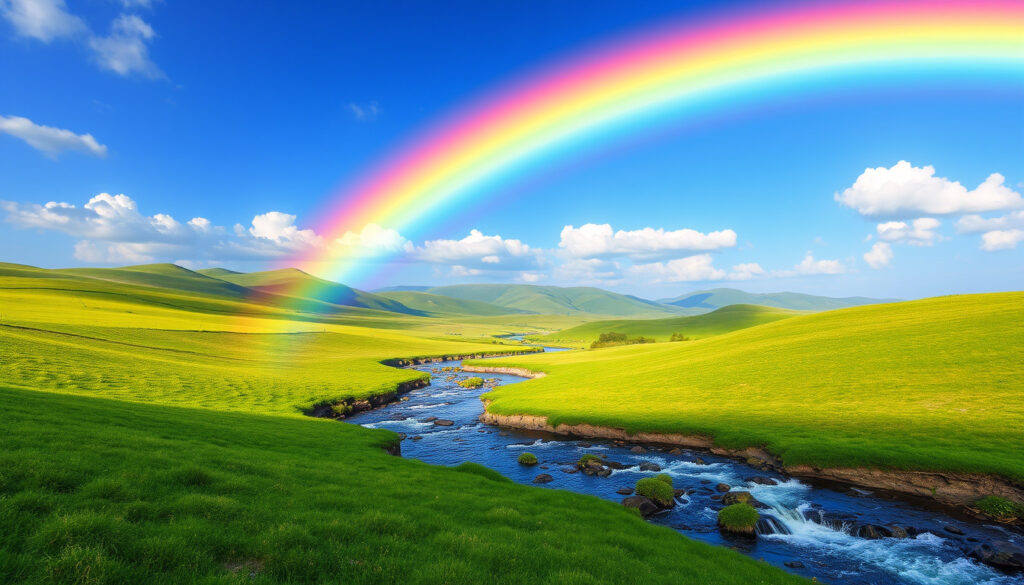
Somewhere Over the Rainbow – Lyrics, History, Meaning and Covers
Somewhere Over the Rainbow stands as one of the most enduring songs in American musical history. Composed for the 1939 film The Wizard of Oz, this ballad has transcended its cinematic origins to become a cultural touchstone, ranking as the number one song of the 20th century according to the Recording Industry Association of America. The song’s journey from a near-deletion from the film to international acclaim reflects both its musical brilliance and the universal resonance of its themes.
Judy Garland’s performance as Dorothy Gale introduced this song to millions, and her rendition continues to define the classic interpretation. Yet the song’s influence extends far beyond the silver screen, inspiring countless covers and interpretations across multiple generations and musical genres.
What Are the Lyrics to Somewhere Over the Rainbow?
The lyrics paint a vivid picture of longing and hope. Dorothy’s opening verses describe a fantastical place existing beyond the rainbow, a land heard of only in lullabies, where the sky turns blue and dreams materialize into reality. The everyday imagery of “lemon drops” and “chimney tops” grounds this fantastical longing in relatable experience.
The song’s structure builds toward a poignant question: why can’t the singer join the bluebirds in their flight over the rainbow? This central tension between aspiration and limitation gives the lyrics their emotional depth, making them resonate with listeners facing their own obstacles and desires for escape.
The song employs rubato style in slow 4/4 time, lasting approximately 2 minutes and 46 seconds. The iambic lines create a gentle, lullaby-like quality while everyday imagery like “lullaby” and “lemon drops” makes the fantastical elements accessible and intimate.
Full Lyrics
The complete lyrics as performed in the film begin with Dorothy singing softly on her Kansas farm:
Somewhere over the rainbow, way up high
There’s a land that I heard of once in a lullaby.
Somewhere over the rainbow, skies are blue
And the dreams that you dare to dream really do come true.
The middle section introduces the wishful thinking that defines the song’s emotional core:
Someday I’ll wish upon a star
And wake up where the clouds are far behind me,
Where troubles melt like lemon drops,
Away above the chimney tops
That’s where you’ll find me.
The final verses return to the rainbow imagery with a more personal, yearning quality:
Somewhere over the rainbow, bluebirds fly.
Birds fly over the rainbow—why then, oh why can’t I?
If happy little bluebirds fly beyond the rainbow
Why, oh why can’t I?
- Ranked number one American song of the 20th century by RIAA and National Endowment for the Arts
- Won the Academy Award for Best Original Song in 1940
- Nearly removed from The Wizard of Oz by studio executives who deemed it too slow
- Israel Kamakawiwo’ole’s 1993 ukulele medley revived widespread interest in the song
- Yip Harburg and Harold Arlen drew on Yiddish lullaby traditions and immigrant experiences
- Copyright protection continues until approximately 2034 in the United States
| Aspect | Details |
|---|---|
| Lyricist | Yip Harburg |
| Composer | Harold Arlen |
| Length | 2:46 (original recording) |
| Genre | Jazz ballad |
| Film | The Wizard of Oz (1939) |
| Award | Academy Award for Best Original Song (1940) |
| US Copyright Expiration | Approximately 2034 (95 years post-publication) |
Who Wrote Somewhere Over the Rainbow and What Is Its Origin?
The Songwriters Behind the Classic
Harold Arlen composed the music while Yip Harburg wrote the lyrics for this now-iconic ballad. Both men were first-generation Jewish Americans, and their shared background profoundly influenced the song’s emotional landscape. The collaborators frequently worked together, and their partnership produced several successful compositions, but “Somewhere Over the Rainbow” would become their most celebrated achievement. Harold Arlen’s career spanned several decades, though this particular composition would define his legacy.
Harburg drew inspiration from ballads about troubled individuals seeking escape from difficult circumstances. His vision for the song centered on a young girl longing to flee the colorless, arid environment of Kansas for a vibrant, magical place symbolized by the rainbow. This narrative of yearning for something better would resonate deeply with audiences, particularly those familiar with immigrant experiences and the pursuit of what Harburg called the “goldene medina” – a golden land where dreams come true.
The Film Connection
The song was written specifically for The Wizard of Oz, the 1939 Metro-Goldwyn-Mayer production that would become one of the most beloved films in cinema history. Harold Arlen crafted a melody featuring what he described as a “long broad line,” creating music that could support Dorothy’s emotional journey from the sepia-toned struggles of Kansas to the magical Technicolor world of Oz.
The song appears early in the film, shortly after Dorothy discovers that her dog Toto has been taken by Miss Gulch. Sitting alone on her farm, she begins to sing, imagining a place where her troubles will simply vanish. This placement establishes the film’s central theme of escapism and hope, contrasting the black-and-white world of Kansas with the possibilities represented by the rainbow.
Recording Sessions
According to records from the production, the song was recorded on October 7, 1938. An unused reprise was recorded on October 17 of the same year, with additional recordings following on May 6, 1939. Judy Garland performed the song as Dorothy Gale, bringing a youthful sincerity and earnest hope that would define the song’s character.
What Is the Meaning of Somewhere Over the Rainbow?
The song’s meaning operates on multiple levels, from its surface narrative of a child’s wish for escape to deeper interpretations reflecting the immigrant experience and human aspiration. At its core, the lyrics express a universal desire for a place beyond current suffering, a realm where dreams become tangible realities.
Yip Harburg and Harold Arlen infused the composition with Yiddish lullaby influences, drawing on their backgrounds as children of immigrants who had come to America seeking better opportunities. The concept of America as a land of possibility – the “goldene medina” – permeates the lyrics, even as the specific imagery evokes a more personal, childlike longing.
Historical and Cultural Context
The song emerged during a period marked by significant challenges, including the Great Depression’s lingering effects and the rising threat of anti-Jewish persecution in Europe. Some cultural analysts have noted that lines like “troubles melt like lemon drops” and “away above the chimney tops” take on additional significance when viewed through the lens of pre-World War II Jewish experience, where the “chimney tops” might evoke darker associations.
The repeated question – “why can’t I?” fly like the bluebirds – resonates with those who felt trapped by circumstances beyond their control, whether economic hardship, social constraints, or political persecution. This universality of longing has contributed to the song’s enduring appeal across generations and cultural boundaries.
Musicologists note that the composition shifts from major keys to yearning sevenths, transforming a simple farmhouse setting into what some describe as a “spiritual launch-pad” – a place from which dreams can take flight. This musical technique reinforces the lyrics’ themes of aspiration and hope.
What Are Famous Covers and Cultural Impact?
Israel Kamakawiwo’ole’s Iconic Interpretation
Perhaps the most influential modern interpretation came from Hawaiian musician Israel Kamakawiwo’ole, whose 1993 ukulele medley combining “Somewhere Over the Rainbow” with “What a Wonderful World” became a global phenomenon. His relaxed, soulful rendition offered a completely different emotional texture from Garland’s original, yet it preserved the essential longing and hope that define the song.
Kamakawiwo’ole’s version achieved posthumous chart success, reaching number one on Billboard charts in 2004. The recording demonstrated the song’s remarkable adaptability, showing how the same composition could be transformed while maintaining its essential character. His interpretation particularly resonated with audiences who appreciated his fusion of Hawaiian musical traditions with American popular standards.
Other Notable Recordings
Judy Garland’s original recording continues to serve as the definitive version, appearing on numerous compilation albums including “The Wizard of Oz (OST)” and “Over the Rainbow – The Very Best of Judy Garland.” The song has been covered by artists across multiple genres, from jazz interpreters to rock musicians, each bringing their own perspective to the material.
The song’s influence extends into sampling and quotation, with various artists incorporating elements of the composition into their own work. This ongoing creative engagement demonstrates the song’s flexibility and enduring relevance to contemporary musicians.
The Near-Deletion from The Wizard of Oz
Studio executives at MGM initially considered removing the song from the film, deeming it too slow or potentially mismatched with the film’s pacing. The concerns centered on whether audiences would accept such a contemplative moment early in the picture. However, advocacy from production members convinced studio leadership to retain the composition, and the decision proved prescient as the song became one of the film’s most memorable elements.
The song remains under copyright protection, currently owned by Leo Feist, Inc./EMI Feist Catalog Inc. Under current US copyright law, works from 1939 will enter the public domain approximately 95 years after publication, which would be around 2034. However, individuals should verify the current legal status before any public use.
Timeline of Key Moments
The song’s history spans multiple decades, with several pivotal moments shaping its legacy:
- 1938 – Harold Arlen composes the music and Yip Harburg writes lyrics specifically for The Wizard of Oz
- October 7, 1938 – Judy Garland records the song for the film production
- August 1939 – The Wizard of Oz premieres in movie theaters nationwide
- 1940 – The song wins the Academy Award for Best Original Song at the 12th Academy Awards ceremony
- 1993 – Israel Kamakawiwo’ole records his ukulele medley, later released posthumously
- 2004 – Kamakawiwo’ole’s version reaches number one on Billboard charts
- 2007 – RIAA and National Endowment for the Arts officially designate the song as the number one song of the 20th century
What Is Established Versus Uncertain
| Established Information | Information That Remains Unclear |
|---|---|
| Yip Harburg wrote the lyrics | The precise personal experience that inspired specific lines |
| Harold Arlen composed the music | Full details of the internal debates over song placement |
| The song was considered for removal from the film | Complete identity of those who advocated for its retention |
| Judy Garland performed it in The Wizard of Oz | Specific sales and reception figures from the original 1939 release |
| The song won the Academy Award for Best Original Song | Exact date when public domain status will take effect |
| Israel Kamakawiwo’ole recorded a famous cover version | Complete list of all artists who have recorded covers |
Cultural Significance and Legacy
Somewhere Over the Rainbow occupies a unique position in American musical culture. Its recognition by the RIAA and National Endowment for the Arts as the century’s top song reflects not merely commercial success but deep cultural resonance. The composition has been performed, recorded, and adapted by artists across countless genres and generations, demonstrating a versatility that transcends its original context.
The song’s themes of longing, hope, and the pursuit of something better than current circumstances remain universally relatable. Whether understood as a child’s simple wish for adventure, an adult’s desire for escape from mundane difficulties, or the deeper aspirations of those seeking refuge or opportunity, the lyrics continue to speak to audiences worldwide.
The collaboration between Harburg and Arlen produced a work that transcends its era, yet carries the unmistakable imprint of its creators’ experiences as children of immigrants navigating the American experience during challenging times. This grounding in real human experience contributes to the song’s authenticity and emotional power.
“A song of hope… something to believe in.” — Comments attributed to Yip Harburg regarding the composition’s purpose
Summary
Somewhere Over the Rainbow represents a remarkable achievement in American songwriting, combining memorable melody with evocative lyrics to create a piece that has touched generations of listeners. From its creation for The Wizard of Oz through Judy Garland’s definitive performance to Israel Kamakawiwo’ole’s soulful reinterpretation, the song has demonstrated an extraordinary capacity to connect with diverse audiences while maintaining its essential character. Its recognition as the century’s greatest song reflects both its intrinsic musical qualities and its ability to articulate universal human aspirations in accessible, moving terms. The upcoming transition toward public domain status will likely spark renewed interest and creative reinterpretations, ensuring the song’s continued relevance for future generations. Those exploring the cultural significance of American music may find it illuminating to examine how works like this one achieve timeless status, much as one might investigate the meaning behind symbolic cultural artifacts that have endured across eras.
Frequently Asked Questions
What are the lyrics to Somewhere Over the Rainbow?
The lyrics begin with “Somewhere over the rainbow, way up high / There’s a land that I heard of once in a lullaby.” The full song continues with verses about wishing upon a star, troubles melting like lemon drops, and bluebirds flying beyond the rainbow. The complete lyrics are available in various online databases dedicated to preserving classic song texts.
Who wrote Somewhere Over the Rainbow?
Yip Harburg wrote the lyrics and Harold Arlen composed the music. Both were first-generation Jewish American collaborators who frequently worked together. Harburg drew inspiration from immigrant experiences and Yiddish lullaby traditions.
Is Somewhere Over the Rainbow public domain?
No, the song remains under copyright protection, currently owned by Leo Feist, Inc./EMI Feist Catalog Inc. Under current US copyright law extending protection for 95 years, works from 1939 are expected to enter the public domain around 2034.
What movie is Somewhere Over the Rainbow from?
The song was written for and appears in the 1939 film The Wizard of Oz, where Judy Garland performed it as Dorothy Gale. The placement early in the film establishes themes of escapism and hope.
Who sang Somewhere Over the Rainbow in The Wizard of Oz?
Judy Garland sang the song as Dorothy Gale in the 1939 film. Her performance became the definitive interpretation and established the song’s place in popular culture.
Why was Somewhere Over the Rainbow almost cut from The Wizard of Oz?
MGM executives initially considered removing the song because they felt it moved too slowly or might not fit the film’s pacing. However, advocacy from production members convinced studio leadership to retain the composition, where it became one of the film’s most memorable elements.
What are some famous covers of Somewhere Over the Rainbow?
The most notable modern cover is Israel Kamakawiwo’ole’s 1993 ukulele medley with “What a Wonderful World,” which achieved posthumous chart success. Numerous other artists across various genres have recorded their own interpretations over the decades.
What award did Somewhere Over the Rainbow win?
The song won the Academy Award for Best Original Song in 1940 at the 12th Academy Awards ceremony. It has since been recognized as the number one song of the 20th century by the RIAA and National Endowment for the Arts.
More related posts
 La Liga 2 Standings 2025-26: Promotion, Relegation & Table Guide
 Drog-Bruk Roman Szkaradek Reviews: Hat Snatch Fallout
 Best Places to See Aurora in Alaska: Top Locations & Tips
 Boston Celtics vs San Antonio Spurs Player Stats Mar 10, 2026
 United Airlines Grounds Flights: 2025 Ground Stops
 Bad Boys 4 Cast: Full List with Will Smith, Martin Lawrence
 Tom Cruise, Ana de Armas: Timeline, Split, Age Gap
 Maybe Happy Ending Broadway: Plot, Cast, Tony Awards 2024