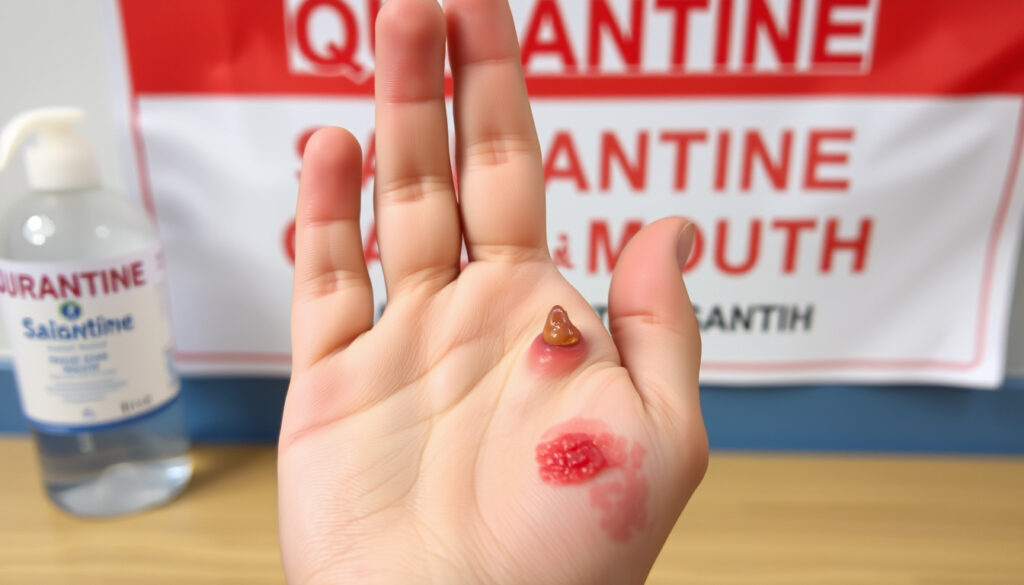
Hand, Foot, and Mouth Disease: Symptoms, Stages, Quarantine
Few things unsettle a parent more than watching their toddler develop a fever and noticing small blisters on their hands – but hand, foot, and mouth disease can hit adults harder. This guide walks you through CDC, AAP, and other health authorities’ advice on the cause, contagious window, and what to do when it lands in your household.
Common in children under 5 years: Most cases occur in this age group ·
Typical duration: 7 to 10 days ·
Contagious period: Most contagious during the first week of illness ·
Incubation period: 3 to 6 days after exposure ·
Cause: Enteroviruses, most commonly coxsackievirus A16
Quick snapshot
- Exact duration of virus shedding after symptoms resolve varies by individual (Medical News Today)
- Why some adults develop severe symptoms while others remain asymptomatic is not fully understood (Medical News Today)
- Long-term recurrence patterns in adults are not well documented (Medical News Today)
- The exact threshold for return to work or school after HFMD is not universally standardized across health authorities (Medical News Today)
- The role of immunity from previous infections in preventing future HFMD is not completely understood (Medical News Today)
- Incubation: 3 to 6 days after exposure (CDC)
- Fever and sore throat appear day 1–3 of illness (HealthyChildren.org (AAP))
- Rash and mouth sores appear 1–2 days after fever (WebMD)
- Most symptoms resolve by day 7–10 (CDC)
- Continue frequent handwashing with soap and water for at least 20 seconds (CDC)
- Disinfect high-touch surfaces and shared items (CDC)
- Monitor for signs of dehydration, especially in young children (HealthyChildren.org (AAP))
- Consult a doctor if fever persists beyond a few days or if symptoms worsen (CDC)
Six key facts distilled from CDC and AAP guidance reveal the pattern of HFMD.
| Fact | Detail |
|---|---|
| Most common cause | Coxsackievirus A16 (enterovirus group) (CDC) |
| Primary demographic | Children under 5 years old (CDC) |
| Incubation period | 3 to 6 days (CDC) |
| Contagious window | Peak first week; virus can be shed for weeks (WebMD) |
| Usual duration | 7 to 10 days (Medical News Today) |
| Treatment | Symptom management only (no antiviral) (WebMD) |
What is the cause of hand, foot, and mouth disease?
Which viruses cause HFMD?
Hand, foot, and mouth disease is caused by enteroviruses, most commonly coxsackievirus A16 (CDC). Less frequently, other enteroviruses such as enterovirus 71 can trigger outbreaks. The illness is not related to the foot-and-mouth disease found in livestock (CDC).
How is HFMD transmitted?
The virus spreads through respiratory droplets when an infected person coughs or sneezes, through direct contact with fluid from blisters, and via the fecal-oral route (CDC). It can survive on surfaces, so touching contaminated toys or doorknobs and then touching the mouth or nose can lead to infection.
HFMD is often mistaken for a cold in its early stages, which means people unknowingly spread it before the telltale rash appears. That first week of mild fever and sore throat is when the virus is most contagious (WebMD).
The implication: knowing the virus’s transmission routes helps tailor prevention — especially in households with multiple children where shared surfaces create repeated exposure.
What are the first signs of hand, foot, and mouth in adults?
How do adult symptoms differ from children?
Adults who contract HFMD often experience a fever, sore throat, and reduced appetite as the first signs (Medical News Today). Unlike children, adults may develop more severe symptoms, including intensely painful mouth sores and a rash that can be less typical — sometimes appearing only on the palms and soles (WebMD).
What is the timeline of symptom stages in adults?
- Day 1–3: Fever, sore throat, and loss of appetite appear (HealthyChildren.org (AAP))
- Day 2–4: Painful mouth sores (herpangina) and a rash of flat red spots or blisters develop on hands, feet, and sometimes the face or buttocks (WebMD)
- Day 5–7: Fever resolves; rash may start to fade (CDC)
- Day 7–10: Most symptoms clear, though the virus can still be shed (Medical News Today)
Adults often dismiss their early symptoms as a common cold, delaying isolation and increasing the risk of spreading the virus to children and coworkers. Recognizing the distinct timeline is the first step to containing household transmission (CDC).
The paradox: adults may suffer worse symptoms but are less likely to be correctly diagnosed, which prolongs the contagious period in family settings.
How long is hand, foot, and mouth disease contagious?
When is a person most contagious?
People with HFMD are most contagious during the first week of illness, especially before the rash appears (WebMD). The virus is present in respiratory secretions and blister fluid during that period. The CDC notes that the virus can also be shed in stool for several weeks after symptoms resolve, though contagiousness decreases once fever and blisters are gone (CDC).
What is the quarantine period for HFMD?
The CDC advises staying home while fever is present and while blisters are still open (CDC). For children, that usually means keeping them out of daycare or school until the fever has been gone for 24 hours (without fever‑reducing medication) and mouth sores have healed (WebMD). The typical isolation window is about 7 to 10 days from the start of symptoms.
Balancing the desire to return to normal activities with the risk of community spread is tough: a child who feels better by day 6 may still shed virus, so adhering to the full quarantine period protects vulnerable peers.
What this means: the contagious window is longer than most people assume. Even after the rash fades, good hand hygiene remains critical to avoid passing the virus to others.
Can I hug my child with hand, foot, and mouth?
How to avoid spreading HFMD in the household?
Hugging a child with HFMD is generally low risk as long as you avoid contact with open blisters and wash hands afterward (CDC). The greater risk comes from sharing utensils, towels, or toothbrushes, and from touching surfaces the child has contaminated. The CDC recommends washing hands with soap and water for at least 20 seconds after diaper changes, before meals, and after coughing or sneezing (CDC).
Is HFMD caused by poor hygiene?
No. HFMD is not exclusively a disease of poor hygiene (HealthyChildren.org (AAP)). It spreads easily among children in daycare because of close contact and shared toys, regardless of cleanliness. However, frequent handwashing and disinfecting surfaces significantly reduce transmission (CDC).
The virus can live on surfaces for days. A child may shed virus in stool for weeks, so diaper changes require extra care — even after the child feels well (Medical News Today).
The pattern: hugging is safe with precautions; the real threat is shared surfaces and lax hand hygiene. A clean household is your best defense.
How long does it take for hand and foot symptoms to go away?
What is the typical recovery period?
The full course of HFMD usually lasts 7 to 10 days (CDC). Fever typically resolves within 1–2 days, while the rash and mouth sores can take 5–7 days to heal. In some adults, the rash may last slightly longer, but most cases clear up without medical treatment (Medical News Today).
What treatments help symptoms heal faster?
There is no cure for HFMD, but symptom management can ease discomfort (WebMD). The American Academy of Pediatrics recommends acetaminophen or ibuprofen for fever and pain (HealthyChildren.org (AAP)). Saltwater mouth rinses can soothe mouth sores, and cold, soft foods (like yogurt or popsicles) are easier to swallow. The CDC warns against giving aspirin to children with HFMD due to the risk of Reye’s syndrome (CDC).
Treatment is entirely supportive, which means the body clears the virus on its own. The role of a caregiver is to keep the patient comfortable, hydrated, and isolated to prevent further spread.
The pattern: symptom relief follows a predictable timeline, but because the virus continues to shed, the “feeling better” moment is not the end of contagiousness.
Step-by-Step Home Management for HFMD
- Manage fever and pain. Give acetaminophen or ibuprofen as directed. Never give aspirin to children (CDC). For fever management basics, see our guide on What Is a Fever.
- Encourage fluids. Offer water, milk, or oral rehydration solutions to prevent dehydration, especially if mouth sores make swallowing painful (HealthyChildren.org (AAP)).
- Serve soft, cool foods. Yogurt, applesauce, smoothies, and popsicles are gentle on sore mouths. Avoid acidic or salty foods.
- Use saltwater rinses. Mix ½ teaspoon of salt in a glass of warm water and swish (for older children and adults) to soothe mouth ulcers.
- Keep the person home. Stay away from school, daycare, or work until the fever has been gone for 24 hours and blisters have dried (WebMD).
- Wash hands frequently. Soap and water for at least 20 seconds after any contact with the infected person or surfaces (CDC).
- Disinfect surfaces. Clean toys, doorknobs, countertops, and bathroom fixtures with a bleach‑based cleaner or EPA‑registered disinfectant (CDC).
The pattern: home management works, but strict isolation is the key to preventing community spread.
Timeline of HFMD Symptoms and Contagion
- Day 0–2 after exposure — Incubation period; no symptoms (CDC)
- Day 1–3 of illness — Fever, sore throat, reduced appetite appear (HealthyChildren.org (AAP))
- Day 1–2 after fever — Painful mouth sores and rash on hands, feet, sometimes face or buttocks (WebMD)
- Day 5–7 — Fever resolves; rash may begin to fade (CDC)
- Day 7–10 — Most symptoms gone; person may still shed virus (Medical News Today)
The gap between feeling better and being non‑contagious is the most deceptive phase. Parents often let their child return to school too early, only to spark a new outbreak in the classroom.
The implication: the timeline shows that recovery and contagiousness don’t align, so caution beyond symptom resolution is necessary.
What We Know and What’s Still Unclear
Confirmed facts
- HFMD is caused by enteroviruses, primarily coxsackievirus A16 (CDC)
- Children under 5 are most affected, but adults can contract it from children (Medical News Today)
- There is no specific antiviral treatment; care is supportive (WebMD)
- Most people recover in 7 to 10 days (CDC)
- Hand hygiene and surface disinfection reduce transmission (CDC)
What’s unclear
- Exact duration of virus shedding after symptoms resolve — it varies by individual (Medical News Today)
- Why some adults develop severe symptoms while others remain asymptomatic is not fully understood
- Long‑term recurrence patterns in adults are not well documented
- The exact threshold for return to work or school after HFMD is not universally standardized across health authorities
- The role of immunity from previous infections in preventing future HFMD is not completely understood
What this means: while many aspects are well-understood, gaps remain in predicting individual outcomes and transmission duration.
Expert Perspectives on HFMD
“Hand, foot, and mouth disease is a common illness that usually causes fever, mouth sores, and skin rash.”
CDC (U.S. public health authority)
“Parents can ease fever and pain with acetaminophen or ibuprofen. Do not give aspirin to children.”
HealthyChildren.org (American Academy of Pediatrics)
“Adults can get HFMD, and though it’s generally not serious, symptoms may be more severe than in children.”
Medical News Today (health media)
The pattern: expert consensus confirms that HFMD is self-limited, but adult symptom severity requires vigilance.
For parents and caregivers in the US, the approach is clear: follow CDC guidelines on hand hygiene and isolation to reduce household transmission. Ignoring the contagious window can lead to weeks of illness cycling through the family. The choice is simple: strict hygiene and patience, or repeated outbreaks under your own roof.
Frequently asked questions
Can adults get hand, foot, and mouth disease more than once?
Yes. While most people develop immunity to the specific virus that caused their first infection, different enterovirus strains can cause HFMD again later in life (Medical News Today).
Is hand, foot, and mouth disease the same as foot-and-mouth disease in animals?
No. HFMD is caused by enteroviruses and affects humans only; foot-and-mouth disease is caused by a different virus (Aphthovirus) and affects livestock. They are not related (CDC).
What is the best way to treat mouth sores from HFMD?
Saltwater rinses, cold foods, and over‑the‑counter pain relievers (acetaminophen or ibuprofen) can soothe mouth sores. Avoid acidic, salty, or spicy foods (HealthyChildren.org (AAP)).
Can hand, foot, and mouth disease cause complications in pregnancy?
Most pregnant women who contract HFMD have typical mild symptoms. However, because fever in early pregnancy can be a concern, it’s best to consult a healthcare provider (CDC).
How long should a child stay home from school after HFMD?
Children should stay home until the fever has been gone for 24 hours (without fever‑reducing medication) and mouth sores have healed. This typically takes 7 to 10 days (WebMD).
What are the signs of dehydration in a child with HFMD?
Signs include dry mouth, sunken eyes, decreased urine output (fewer than 4 wet diapers in 24 hours for infants), irritability, and lethargy (HealthyChildren.org (AAP)).
Is it safe to use ibuprofen for fever during HFMD?
Yes, ibuprofen is safe for children over 6 months when used as directed. Do not give aspirin to children. For infants under 6 months, consult a doctor before using any medication (CDC).
More related posts
 Galaxy A72 to Buy: Refurbished Deals, Specs & Support Status
 Ji Chang-wook: Age, Height, Dramas & Personal Life Facts
 Cast of The Amateur 2024 Film – Full List of Actors
 Stocking Jobs Near Me in Ireland: Pay & Skills Guide
 Espanyol vs FC Barcelona Lineups: Derby History & Preview
 Houston Rockets vs Denver Nuggets Timeline: Key Events
 University of California, Berkeley: Rankings vs UCLA, Harvard
 7 Little Johnstons Season 14 – Premiere, Cast, Episodes, Streaming