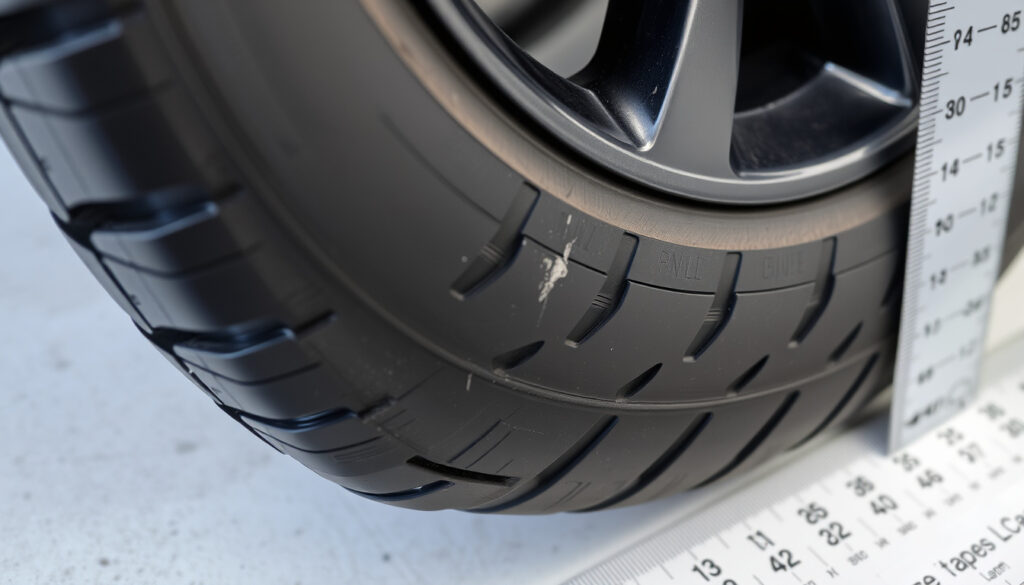
How to Read Tire Size: What the Numbers Mean (Complete Guide)
You’ve probably glanced at the sidewall of your tire and seen a jumble of numbers and letters. It’s not random — it’s a precise code that tells you everything about the tire’s size, capacity, and limits. Knowing how to read it can save you from buying the wrong fitment or compromising safety.
Tire width measurement: millimeters (first number) ·
Aspect ratio definition: percentage of tire width (second number) ·
Common wheel diameters: 15 to 20 inches (third number) ·
Load index range: 75 to 126 ·
Speed rating letters: L (75 mph) to Y (186 mph)
Quick snapshot
- Tire width is the first three-digit number, measured in millimeters (Michelin USA, tire manufacturer)
- Aspect ratio is the sidewall height as a percentage of width (Michelin USA)
- Radial construction is indicated by “R” (Michelin USA)
- Wheel diameter is in inches (Michelin USA)
- Exact tire mileage depends heavily on driving habits, road conditions, and maintenance (Bridgestone, tire manufacturer)
- Load index ranges vary; common passenger tires range from 75 to 105 (Cars.com, automotive marketplace)
- DOT date code: 4-digit code for week and year of manufacture (e.g., 2520 = 25th week of 2020) (Michelin USA)
- Industry recommendation: replace tires 6–10 years old regardless of tread (Michelin USA)
- Check load index and speed rating for your vehicle (VA Tire & Auto, automotive service chain)
- Compare tire sizes using the numbers to avoid fitment issues (VA Tire & Auto, automotive service chain)
| Label | Value |
|---|---|
| Tire width unit | millimeters |
| Aspect ratio meaning | sidewall height as percentage of width |
| Wheel diameter unit | inches |
| Load index range | 75–126 |
| Speed rating letters | L (75 mph) to Y (186 mph) |
| Recommended replacement age | 6–10 years |
The table above compresses the essential metrics into a single reference, removing the guesswork for the average driver.
How do I read the size on my tires?
All passenger tire sizes follow a standard format: width / aspect ratio / construction / rim diameter, followed by a service description (load index and speed rating). The sequence is always the same, so once you learn the pattern, you can read any metric tire size.
What do the 3 numbers mean on tire size?
- First number (width): The tire’s width in millimeters, measured from sidewall to sidewall. For example, 225 means 225 mm wide (Michelin USA, tire manufacturer).
- Second number (aspect ratio): The sidewall height as a percentage of the width. A 65 aspect ratio means the sidewall is 65% of the width (Michelin USA).
- Third number (rim diameter): The diameter of the wheel in inches. 17 means the tire fits a 17-inch wheel (Michelin USA).
The implication: these three numbers define the tire’s physical envelope. Changing any one of them affects fitment, handling, and speedometer accuracy.
How do I read tire size in metric?
Metric tire sizes always list the width in millimeters first. If there is no letter before the three-digit number, it’s a metric size (also called Euro-metric) (Tire Rack, tire retailer and educator). For example, 205/55R16 is a metric size. Some tires have a “P” prefix (e.g., P215/60R16) indicating a passenger-car metric size, but the decoding is the same.
How do I read tire size in inches?
Light-truck tires sometimes use a different format, such as 31×10.5R15, where the first number is the overall tire diameter in inches (31), the second is the width in inches (10.5), and the third is the rim diameter in inches (15). But most passenger cars and SUVs use the metric system. Converting metric to inches: divide the width in millimeters by 25.4. A 225 mm tire is about 8.86 inches wide.
What does 225 65r17 mean on a tire?
This is one of the most common passenger tire sizes, often found on mid-size SUVs and crossovers. Let’s decode it piece by piece.
What does tire aspect ratio mean?
- 225 – Tire width: 225 mm (Michelin USA)
- 65 – Aspect ratio: sidewall height is 65% of 225 mm = 146.25 mm (Michelin USA)
- R – Radial construction (Michelin USA)
- 17 – Rim diameter: 17 inches
The “R” stands for radial, meaning the ply cords run radially across the tire — the standard for modern passenger vehicles. The aspect ratio directly affects ride comfort: a higher ratio (e.g., 70) gives a taller, softer sidewall; a lower ratio (e.g., 45) gives a shorter, stiffer sidewall for better cornering.
The pattern: 225/65R17 is a balanced size — wide enough for stability, tall enough for comfort, fitting a common 17-inch wheel.
Is a 225 or 235 tire bigger?
A 235 tire is 10 mm wider than a 225 tire. But the actual overall diameter change depends on the aspect ratio and wheel size. A 235/65R17 has a sidewall height of 152.75 mm (65% of 235 mm), making it taller than a 225/65R17’s 146.25 mm. That extra height increases the overall diameter by about 13 mm, or roughly 1 cm.
Can I use 235 tires instead of 225?
Swapping 235 for 225 is possible in many cases, but you must check three things: clearance on the wheel well and suspension, load capacity, and speedometer calibration. A 235 tire is wider, so it may rub on tight turns. The 10 mm width increase also changes the contact patch, affecting handling and fuel economy (Cars.com, automotive marketplace).
Can I use 245 65R17 instead of 235 65R17?
245/65R17 is 10 mm wider than 235/65R17 and has a 159.25 mm sidewall height (65% of 245 mm). That’s a 13 mm increase in sidewall height, which adds about 26 mm to the overall diameter. This larger size may cause significant speedometer error and might not clear the strut or wheel well. Most manufacturers recommend staying within 3% of the original overall diameter.
Can I run 255 tires instead of 235?
255 vs 235 is a 20 mm width difference — a substantial jump. With the same aspect ratio, the sidewall height increases by 13 mm (65% of 20 mm), and the overall diameter grows by about 26 mm. This often requires wheel spacers, modified suspension, or larger wheels. It’s rarely a direct swap without significant modifications.
Can I fit 225 tyres instead of 235?
Going narrower (225 instead of 235) reduces the contact patch, which can improve fuel economy and snow traction but may reduce cornering grip. The 10 mm narrower width also lowers the sidewall height by 6.5 mm (if aspect ratio is the same), decreasing overall diameter by about 13 mm. Your speedometer will read slightly faster than your actual speed. Always verify load index and speed rating remain adequate.
Wider tires (235 vs 225) offer more grip and a sportier look, but they add weight, reduce fuel economy, and can cause rubbing. The 10 mm difference may seem small, but it changes the geometry of your suspension and steering.
One pattern that emerges from comparing these sizes: a 10 mm width change, with the same aspect ratio, alters the sidewall height by 6.5 mm and overall diameter by 13 mm. That’s enough to affect speedometer readings by about 1–2% — borderline but worth checking.
| Tire size | Width (mm) | Sidewall height (mm) | Overall diameter (mm) | Difference from 225/65R17 |
|---|---|---|---|---|
| 225/65R17 | 225 | 146.25 | 698.5 | — |
| 235/65R17 | 235 | 152.75 | 711.5 | +13 mm |
| 245/65R17 | 245 | 159.25 | 724.5 | +26 mm |
| 255/65R17 | 255 | 165.75 | 737.5 | +39 mm |
What does 215-60 R16 mean on a tire?
This is another common size, often found on compact sedans. The hyphen is sometimes used instead of a slash, but the meaning is identical.
- 215 – Width: 215 mm
- 60 – Aspect ratio: 60% of 215 mm = 129 mm sidewall height
- R – Radial construction
- 16 – Rim diameter: 16 inches
Compared to the 225/65R17, this tire is narrower (215 vs 225 mm), has a lower aspect ratio (60 vs 65), and fits a smaller wheel (16 vs 17 inches). The sidewall height is 129 mm vs 146.25 mm, making it less cushioned but more responsive. The overall diameter is about 664 mm, which is 34.5 mm smaller than the 225/65R17 — a 5% difference that would noticeably affect the speedometer.
Why this matters: small changes in aspect ratio and wheel diameter can dramatically alter the tire’s behavior. A 60-series tire feels firmer on the road, while a 65-series tire absorbs more bumps.
Is a 7 year old tyre ok?
Tire age is a serious safety concern. Even if the tread looks good, rubber compounds degrade over time due to heat, ozone, and UV exposure. The DOT date code on the sidewall tells you the exact week and year of manufacture — a four-digit number like 2520 means the 25th week of 2020 (Michelin USA, tire manufacturer).
Industry groups including Michelin and the Tire Industry Association recommend replacing tires once they reach 6 to 10 years old, regardless of remaining tread depth (Michelin USA). A 7-year-old tire is at the upper end of that window. Inspect for sidewall cracks, bulges, or hardened rubber. If the tire is 7 years old, it’s time to plan a replacement.
How many miles do tyres last?
Mileage varies widely. A typical passenger tire lasts 25,000 to 50,000 miles, depending on the compound, driving habits, road conditions, and maintenance (Bridgestone, tire manufacturer). High-performance tires wear faster; touring tires last longer. The best way to judge is by checking tread depth: replace when the tread reaches 2/32 of an inch (1.6 mm).
A 7-year-old tire may have plenty of tread left if it was driven gently, but the rubber is still aging. Age is the enemy, not mileage alone. Always check the DOT code before buying a used tire.
How to read tire size in 5 steps
- Find the tire size string on the sidewall. It looks like “P225/65R17 91H” or “205/55R16 91V”.
- Read the width — the first three-digit number (e.g., 225). That’s the tire width in millimeters.
- Read the aspect ratio — the two-digit number after the slash (e.g., 65). That’s the sidewall height as a percentage of the width.
- Read the construction and rim diameter — “R” for radial, followed by the wheel diameter in inches (e.g., 17).
- Check the service description — the load index (number) and speed rating (letter) after the size. For example, 91H means load index 91 (1,356 lbs) and speed rating H (130 mph) (Cars.com, automotive marketplace).
That’s all there is to it. Once you can parse this string, you can compare, buy, and maintain tires with confidence.
Clarity section
Confirmed facts
- Tire width is measured in millimeters (first number) (Michelin USA)
- Aspect ratio is the sidewall height as a percentage of width (Michelin USA)
- Wheel diameter is measured in inches (Michelin USA)
- Tire age can be read from the DOT date code (Michelin USA)
- Industry groups recommend replacement after 6–10 years (Michelin USA)
What’s unclear
- Exact mileage of a tire depends heavily on driving habits, road conditions, and tire maintenance (Bridgestone)
- Load index range can vary; common passenger tires range from 75 to 105 (Cars.com)
Quotes from the experts
“The first number to appear in your tire size information is the width, in millimeters, of the correct tires for your vehicle.”
— Michelin USA, tire manufacturer
“A service description like 94Y combines load index 94 with speed rating Y.”
“The load index is a numerical code that corresponds to the maximum weight a single tire can support when properly inflated.”
— Michelin USA
“If there is no letter preceding the three-digit numeric portion of a tire size, it signifies a metric size, also called Euro-metric.”
For the average driver, decoding tire size is a simple skill that prevents costly mistakes. The three numbers — width, aspect ratio, rim diameter — define the tire’s fitment. The load index and speed rating tell you its capacity. And the DOT date code warns you when it’s time to replace. Check your sidewall once a year, and you’ll never buy the wrong tire again.
youtube.com, justtires.com, quicklane.com, lesschwab.com, tyrereviews.com, tirewheelguide.com, vatire.com, 4wheelparts.com, youtube.com
Frequently asked questions
What does the ‘R’ in tire size mean?
R stands for radial construction, meaning the tire’s internal ply cords are arranged radially (at 90 degrees) to the direction of travel. This is the standard for modern passenger tires and offers a smooth ride and long tread life (Michelin USA).
What is load index on a tire?
The load index is a numerical code that corresponds to the maximum weight a single tire can support when properly inflated. For example, load index 91 indicates a capacity of 1,356 lbs. The range for passenger tires is typically 75 to 126 (Michelin USA).
What is speed rating on a tire?
The speed rating is a letter that indicates the maximum sustained speed the tire can handle while carrying its maximum load. An H rating means 130 mph, V means 149 mph, and Y means 186 mph (Cars.com).
How do I find my car’s recommended tire size?
Check the driver’s side door jamb sticker, the owner’s manual, or the glove box. That sticker lists the original equipment tire size and recommended inflation pressure. Never rely solely on the current tire — it may have been replaced with an incorrect size.
Can I mix tire sizes on my vehicle?
Mixing sizes is not recommended unless the vehicle is designed for it (some all-wheel-drive systems require identical rolling diameters). Different sizes can confuse speed sensors, damage the drivetrain, and compromise handling. Always install the same size on all four positions.
How do I read a motorcycle tire size?
Motorcycle tires use a similar format but often include a speed rating and load index after the size. For example, 180/55ZR17: 180 mm width, 55 aspect ratio, Z speed rating (over 149 mph), radial, 17-inch rim. The “Z” before the “R” is a speed rating prefix.
What is the difference between metric and inch tire sizes?
Metric sizes (e.g., 225/65R17) list width in millimeters and rim diameter in inches. Inch-based sizes (e.g., 31×10.5R15) list overall diameter in inches, width in inches, and rim diameter in inches. Metric is used for most passenger cars; inch-based is common for light trucks and off-road vehicles.
More related posts
 Michelin Star Restaurants Near Me – Your Local Fine Dining Guide
 I Love LA Show: Where to Watch, Cast, Season 2 Status
 Queen of the Night Flower: Care, Bloom Cycle & Facts
 Duck Dynasty: The Revival – Watch, Cast & Season Update
 Portrait of a Lady on Fire: Complete Guide & Top Questions
 How Old Is Tate McRae? Age 22, Full Biography 2025
 Best Beef Stew Dumplings Near Me: Buying & Recipes
 Best Budget 3D Printers 2026: Top Picks Under $450