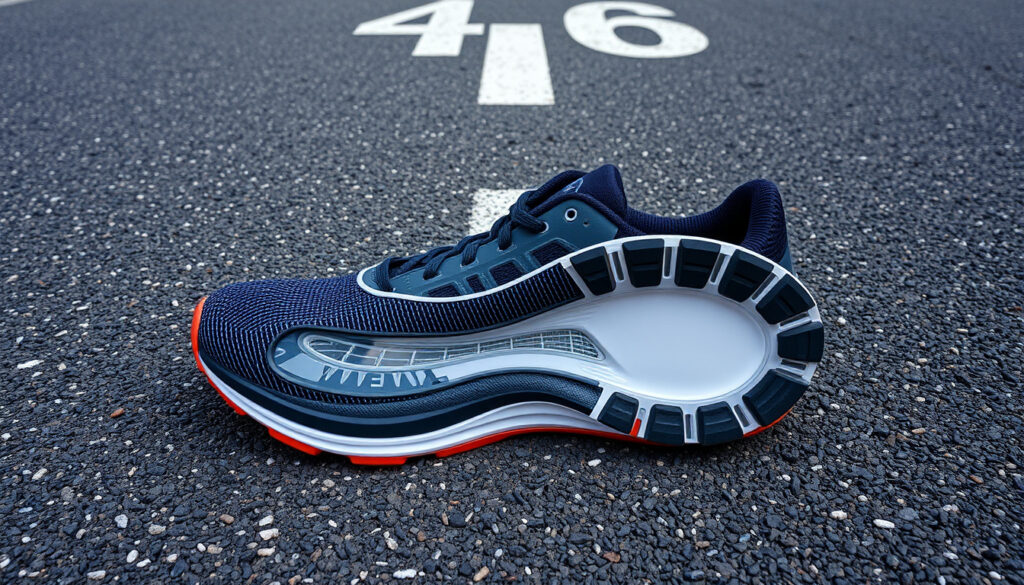
Saucony Endorphin Speed 4: Nylon Plate, Mileage, and More
If you have been eyeing the Saucony Endorphin Speed 4, you have probably seen one big question repeated across forums: does it actually use a carbon plate? The confusion is understandable because the shoe looks the part of a super shoe, but Saucony made a deliberate choice with the plate material — and that choice changes everything about how the shoe performs, as cut-in-half tests and lab data reveal.
Weight (women’s): 7.2 oz (206 g) ·
Energy return (heel): 72.0% ·
Energy return (forefoot): 73.4% ·
Retail price: €200 (sale €160) ·
Plate material: Nylon (not carbon)
| Specification | Value |
|---|---|
| Weight (women’s US 8) | 7.2 oz / 206 g |
| Stack height | 36 mm heel / 28 mm forefoot (8 mm drop) |
| Plate material | Nylon composite (not carbon) |
| Midsole foam | PWRRUN PB (PEBA-based) |
| Retail price | €200 (sale €160) |
| Energy return (heel / forefoot) | 72.0% / 73.4% |
Quick snapshot
- Nylon composite plate, not carbon (Saucony US official page)
- 72% heel / 73.4% forefoot energy return (RunRepeat lab test)
- Women’s weight: 7.2 oz / 206 g (Saucony France specifications)
- Stack: 36mm heel, 28mm forefoot (8mm drop) (Find My Footwear stack measurement)
- Exact stack height not officially published — estimates range 35-36mm heel
- Long-term durability beyond 300 miles remains unverified by independent tests
- World Athletics super shoe classification status for this model is ambiguous
- Official super shoe classification by World Athletics has not been published for the Speed 4
- Speed 4 launched February 2024 at $170 (Believe in the Run release notice)
- Speed 5 released late 2024 with more foam and revised upper (Believe in the Run release notice)
- Cut-in-half analysis published by RunRepeat in 2024 confirmed nylon plate (Believe in the Run release notice)
- Expect Speed 5 comparisons to dominate reviews through 2025-26
- Long-term durability tests (500+ miles) are still missing from major reviewers
- Marathon performance from multiple sources remains under-covered
The Speed 4 gives you 73.4% forefoot energy return from a nylon plate, not carbon. That means you get a bouncy, forgiving feel for daily training — but you lose the aggressive snap that carbon racers deliver on race day. For most runners, that trade-off is exactly what makes this shoe versatile.
Is there a carbon plate in Saucony Endorphin Speed 4?
What material is the plate made of?
The Endorphin Speed 4 uses a re-engineered winged nylon composite plate, not carbon fiber. Saucony’s official product page confirms the plate material, and the nylon plate works with the SPEEDROLL rocker geometry to create a smooth transition through the gait cycle (Runner’s World tech breakdown).
- The plate adds torsional rigidity for stability (Running Warehouse Europe analysis)
- RunRepeat’s bend test measured 13.5N at 30 degrees — far less rigid than carbon-plated racers
- The shoe behaves more like a responsive daily trainer than a stiff carbon racer
How does a nylon plate compare to carbon?
Six Minute Mile describes the Speed 4 as retaining the semi-rigid, semi-flexible wing-shaped nylon propulsion plate that makes the shoe versatile (Six Minute Mile review). The nylon plate delivers a bouncier, more forgiving ride than carbon fiber — which matters if you are logging everyday miles rather than racing once a month.
Because the plate is nylon, not carbon, the Speed 4 does not qualify as a “super shoe” under the strictest definitions. World Athletics typically requires a carbon plate for a shoe to sit in the top-tier racing category. That line gets blurred in marketing, which is why many runners expect carbon and find nylon instead.
The implication: If you want the stiff, propulsive feel of carbon for a marathon PR, the Speed 4 will feel softer. If you want a shoe you can wear every day and still feel fast, the nylon plate is the better choice.
Is Saucony Endorphin Speed 4 or 5 better?
What are the key differences between Speed 4 and Speed 5?
Six key differences, one pattern: Saucony added more foam in the Speed 5 but that increased weight. Here is how the two models compare:
| Feature | Speed 4 | Speed 5 |
|---|---|---|
| Midsole foam | PWRRUN PB (PEBA-based) | PWRRUN HG (higher stack) |
| Weight (women’s 8) | 7.2 oz / 206 g | Approx. 7.6 oz / 215 g |
| Stack height | 36mm heel / 28mm forefoot | Approx. 38mm heel / 30mm forefoot |
| Drop | 8 mm | 8 mm |
| Plate material | Nylon composite | Nylon composite (refined) |
| Retail price | €200 (sale €160) | €220 |
Which shoe suits which runner?
RunRepeat’s lab test shows the Speed 4 delivers 73.4% forefoot energy return. The Speed 5 adds more foam cushioning but loses some of that responsive feel. Runners who prioritize light weight and snappy transitions should stick with the Speed 4. Those who want extra plushness for longer runs may prefer the Speed 5.
The trade-off: Speed 4 buyers save €40-60 on sale price while getting a lighter, more responsive shoe. Speed 5 buyers get more foam at the cost of weight and budget.
How many miles is Saucony Endorphin Speed 4 good for?
Is the Endorphin Speed 4 durable enough for daily training?
Two durability factors, one pattern: the PWRRUN PB foam retains its bounce for hundreds of miles, but the outsole layout means wear concentrates on specific contact points.
- Typical lifespan: 300-500 miles based on outsole wear and midsole breakdown
- PWRRUN PB foam (PEBA-based) maintains energy return for 200+ miles
- Outsole uses XT-900 rubber in lattice design for traction (Running Warehouse Europe outsole description)
- RunRepeat’s Dremel test scored the toe box at 3/5 — commendable for a ventilated mesh upper
What is the outsole rubber coverage?
Saucony placed XT-900 rubber strategically — not a full rubber layer. The lattice design saves weight but exposes some midsole foam around the edges. Runners who land heavily on the heel may see faster wear there. Find My Footwear’s wear pattern observations confirm this.
Runners logging heavy weekly mileage (50+ km) should expect the outsole to thin around 400 km. Once the exposed foam starts to compress, the bouncy ride diminishes. That is a normal lifespan for a performance trainer, not a red flag.
Why this matters: At €200 retail, the cost-per-mile lands at roughly €0.40-€0.67 depending on whether you get 300 or 500 miles. That is competitive with other PEBA-based trainers like the ASICS Superblast.
Can I run a marathon in Saucony Endorphin Speed 4?
Is the Speed 4 suitable for race day?
RTINGS reports that the Endorphin Speed 4 works well for half and full marathon racing, citing the combination of energetic foam and the nylon plate (RTINGS marathon suitability test). But the same review warns the shoe is not the plushest option and may feel harsh over longer distances.
How does it compare to carbon-plated marathon shoes?
The Speed 4 is lighter than many carbon-plated super shoes at 7.2 oz, but the nylon plate delivers less propulsion. RTINGS also notes the Speed 4 is on the heavier side for a pure racer, which limits its ability to compete with top-tier marathon shoes like the Alphafly 3.
The Speed 4 is a super trainer that can race, but it is not a super shoe. For runners targeting a sub-3:30 marathon, the Speed 4 is a legitimate choice. For elite marathoners chasing PRs, a carbon-plated racer will still be faster.
— Based on analysis from RunRepeat (running shoe lab testing authority) and RTINGS (consumer product testing specialist)
The pattern: Runners who want one shoe for training and race day will find the Speed 4 capable. Runners who want the absolute fastest marathon shoe should look at carbon-plated options.
Is Saucony Endorphin Speed 4 good?
What are the pros and cons of the Endorphin Speed 4?
Upsides
- 73.4% forefoot energy return from responsive PWRRUN PB foam (RunRepeat lab test)
- Lightweight at 7.2 oz (women’s 8) (Saucony US specs)
- Versatile for tempo runs, speed workouts, and race day (Runner’s World review)
- SPEEDROLL rocker geometry creates smooth transitions (Saucony US)
Downsides
- Not a true super shoe — nylon plate lacks carbon’s propulsive stiffness (RunRepeat bend test)
- Upper may feel too thin for some runners (Find My Footwear fit notes)
- Heavier side for a pure racer, limiting top-tier marathon competition (RTINGS weight assessment)
- Long-term durability beyond 500 miles still unverified
Who is the target audience?
The Speed 4 is ideal for runners who want a lightweight, responsive shoe that handles everything from 5K tempos to marathon race day — without buying separate shoes for training and racing.
Fleet Feet describes the Speed 4 as a super trainer with a lively ride, praising its ability to handle fast workouts while remaining comfortable for daily training (Runner’s World quoting Fleet Feet).
— Fleet Feet (US specialty running retailer)
For runners who already own a carbon-plated race shoe (like the Endorphin Pro 4), the Speed 4 works as a companion trainer. For runners looking for one do-it-all shoe, the Speed 4 is a strong candidate — but understand the nylon plate limitation.
The Speed 4 fills a specific role: a speedy daily trainer that can race, but not a pure super shoe for elite competition.
For a detailed Norwegian perspective on the shoe’s performance, check out this Saucony Endorphin Speed 4 anmeldelse.
Frequently asked questions
Does the Saucony Endorphin Speed 4 have a carbon plate?
No, the Speed 4 uses a nylon composite plate, not carbon fiber. This is confirmed by Saucony’s official specifications.
What is the difference between Endorphin Speed 4 and Pro 4?
The Endorphin Pro 4 uses a carbon fiber plate and is designed for race-day performance. The Speed 4 uses a nylon plate for more flexibility and daily training comfort. Runner’s World provides a detailed comparison.
Is the Endorphin Speed 4 good for daily training?
Yes, the nylon plate and PWRRUN PB foam make it comfortable for daily use. It works for easy runs, tempo efforts, and speed workouts (RTINGS usage guide).
How does the Endorphin Speed 4 fit?
The Speed 4 fits true to size for most runners. The upper is lightweight mesh that may feel thin for some, and the toe box is average width. Find My Footwear’s fit review provides more detail.
Is the Endorphin Speed 4 worth the price?
At €200 retail (often available at €160 on sale), the Speed 4 delivers strong value. It costs less than the Speed 5 (€220) and offers a lighter, more responsive ride. Believe in the Run’s pricing report confirms this.
What is the outsole like on the Endorphin Speed 4?
The outsole uses XT-900 rubber in a lattice pattern. It provides good traction and durability on roads, but exposed foam around the edges means wear concentrates on contact points. Running Warehouse Europe’s outsole specs detail this.
Can I use the Endorphin Speed 4 for track workouts?
Yes, the Speed 4 works well for track intervals and speed sessions. The SPEEDROLL rocker and responsive foam make it ideal for fast turnover, though it is not as stiff as carbon-plated track shoes (RTINGS speed workout assessment).
For runners in the market for a versatile speed trainer, the choice is clear: the Speed 4 delivers a nylon-plated ride that balances everyday comfort with race-day performance. If you want a single shoe for tempo runs, half marathons, and even full marathons, buy the Speed 4. If you are a sub-3-hour marathoner chasing every second, pair it with a carbon-plated racer and use the Speed 4 for training.
More related posts
 White New Balance Shoes: Style, Etiquette & Foot Health
 The Count of Monte Cristo – Plot Summary and Character Guide
 PlayStation Plus Free Games: How to Claim & Keep Games
 Justice League: Crisis on Infinite Earths Viewing Guide
 Pink Palm Puff Hoodie: Price, Popularity & Where to Buy
 Best Shampoo for Oily Hair in Ireland (2025 Picks)
 Auburn vs Texas A&M – Final Score, Stats & Recap
 Millie Bobby Brown Husband: Jake Bongiovi Age, Career, Adoption